Yestermorrow Design/Build School is located in Waitsfield, Vermont and founded in 1980. The school was founded by architects escaping New York in the ‘70s to build freely through a hands-on / design-build approach in a state that did not regulate the construction of single family homes. To this day Vermont has not adopted the residential building code! This allowed for freedom of design for the shipping container certificate in 2023.
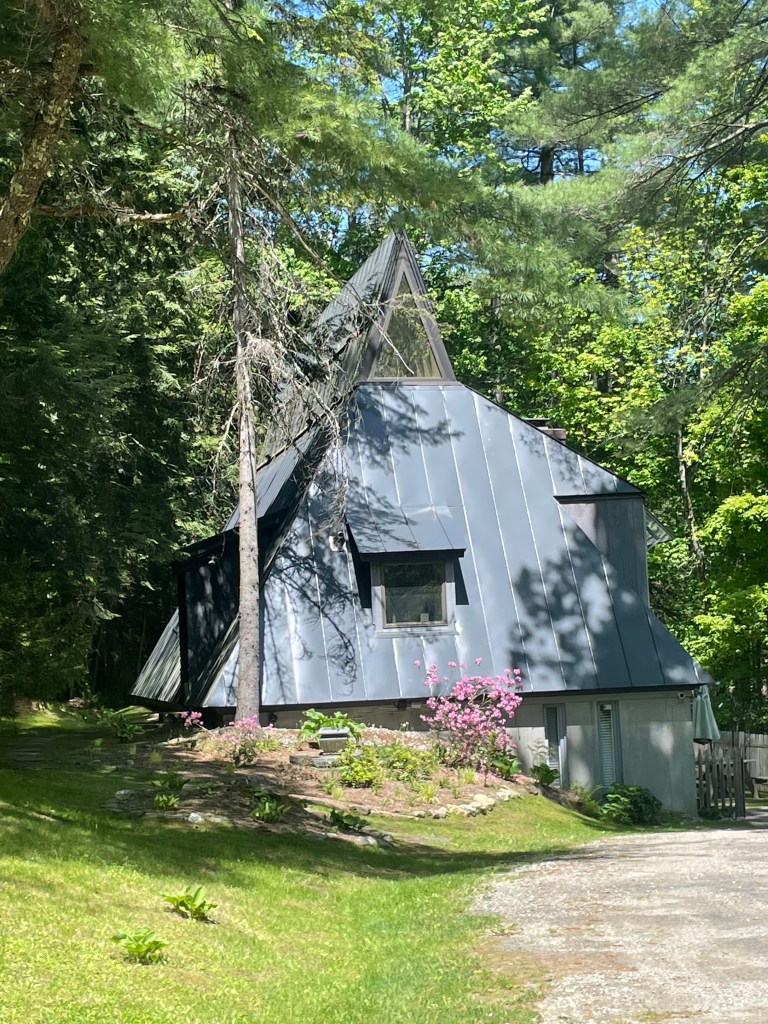
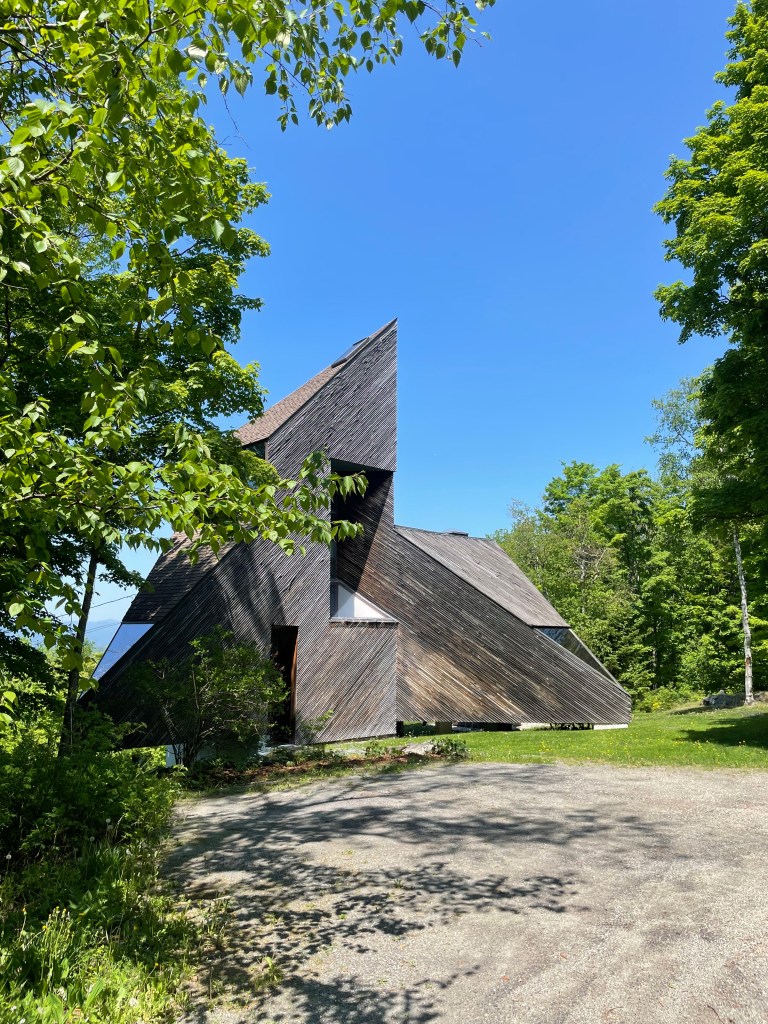
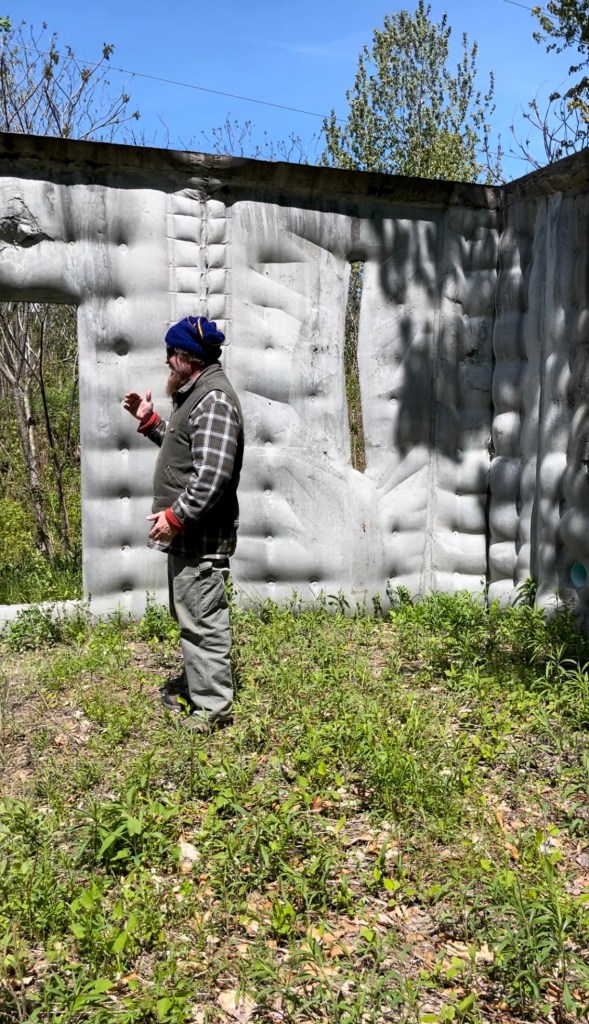
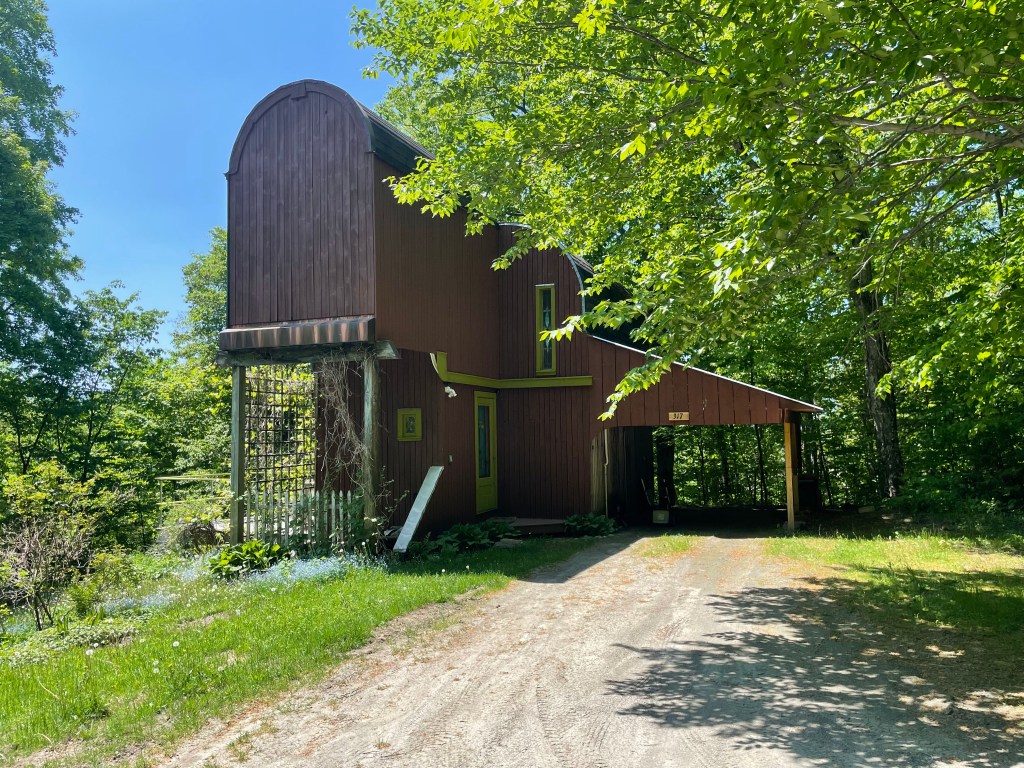
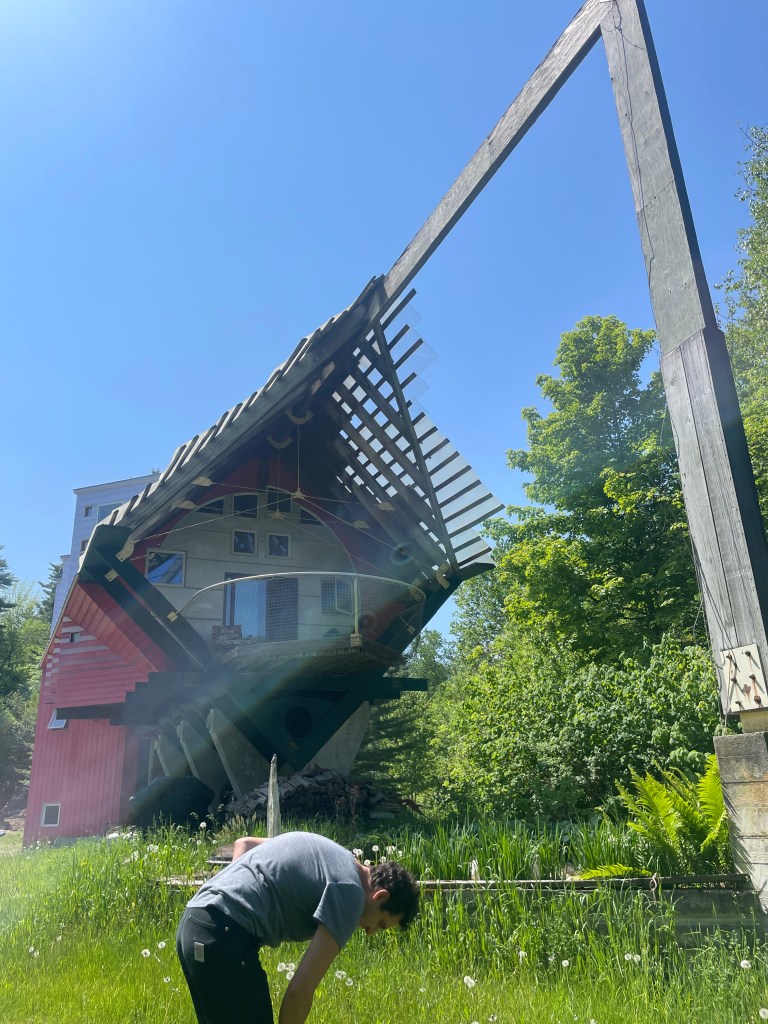
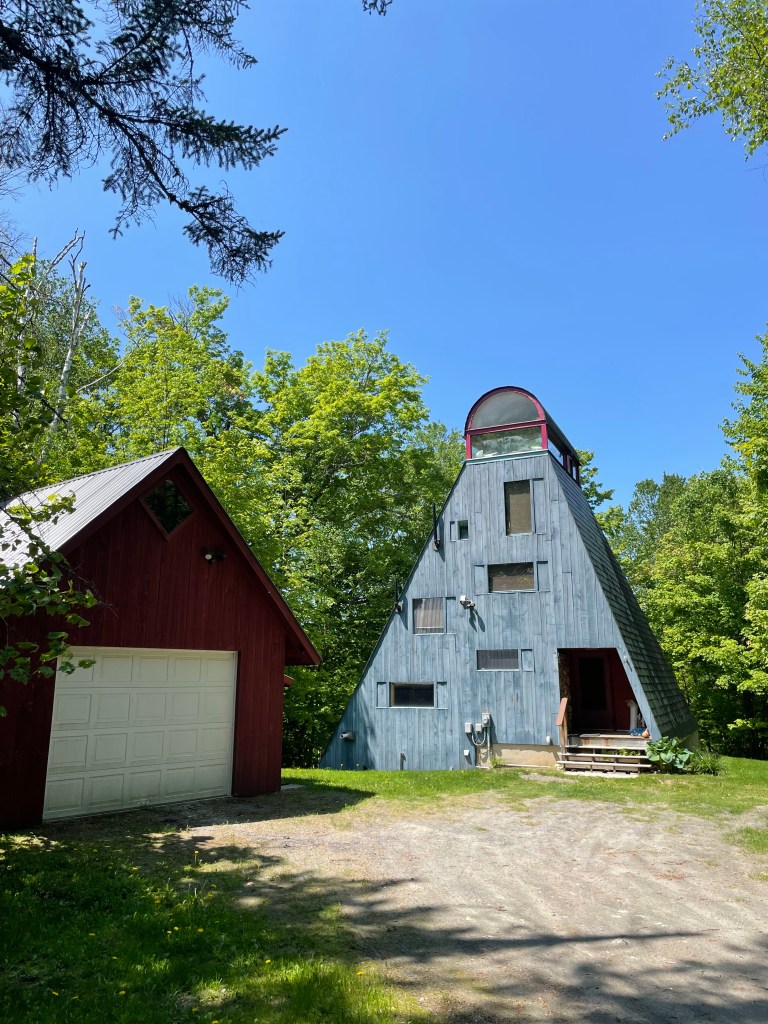
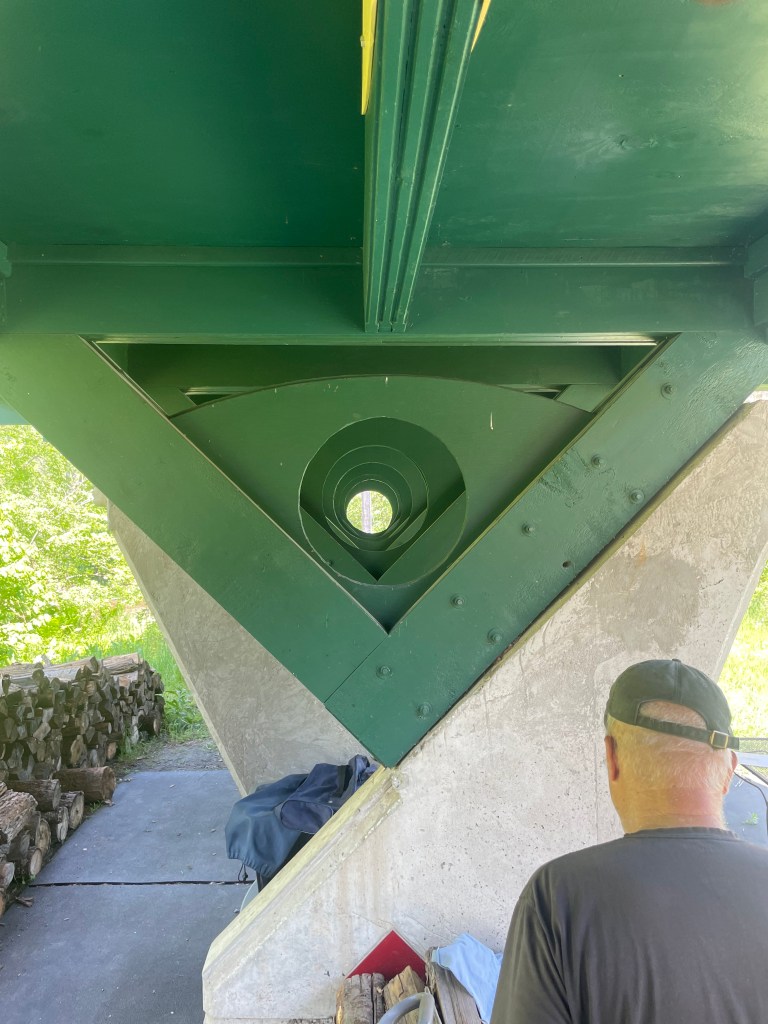
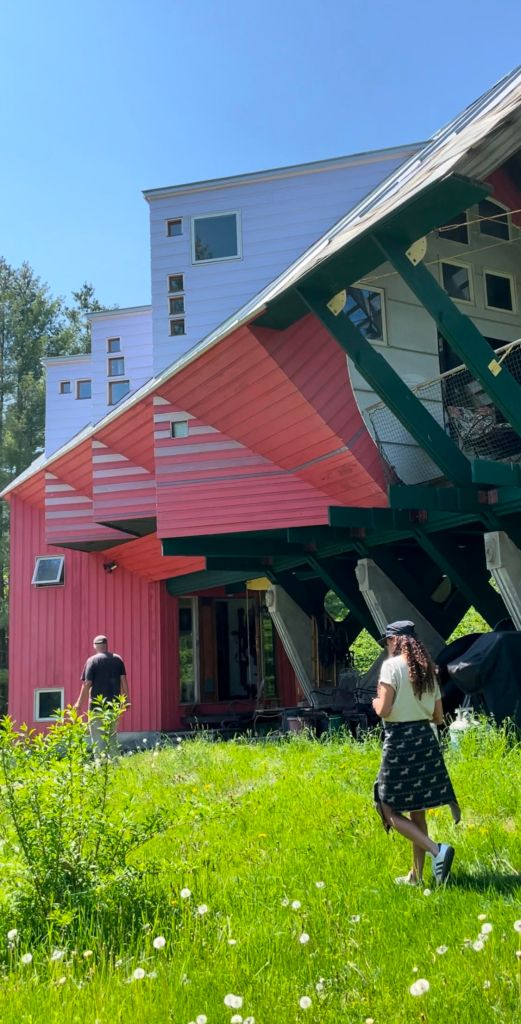
Here are quintessential Yestermorrow designs from the 1970-80s scattered throughout the Mad River Valley, as well as an experimental concrete wall on their campus:
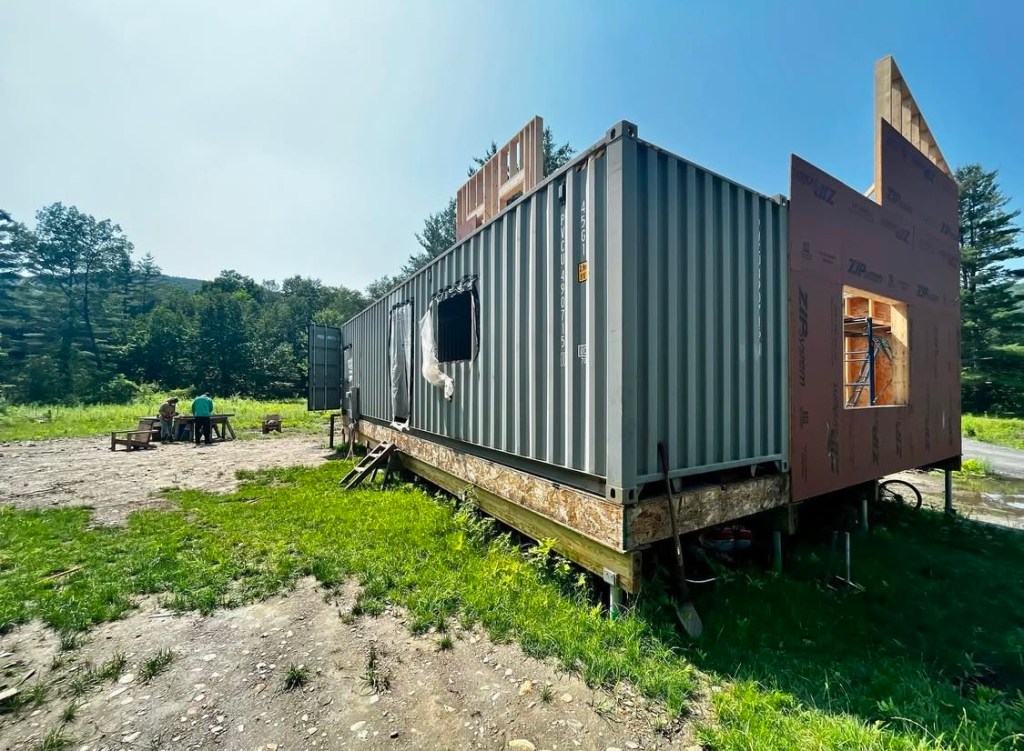
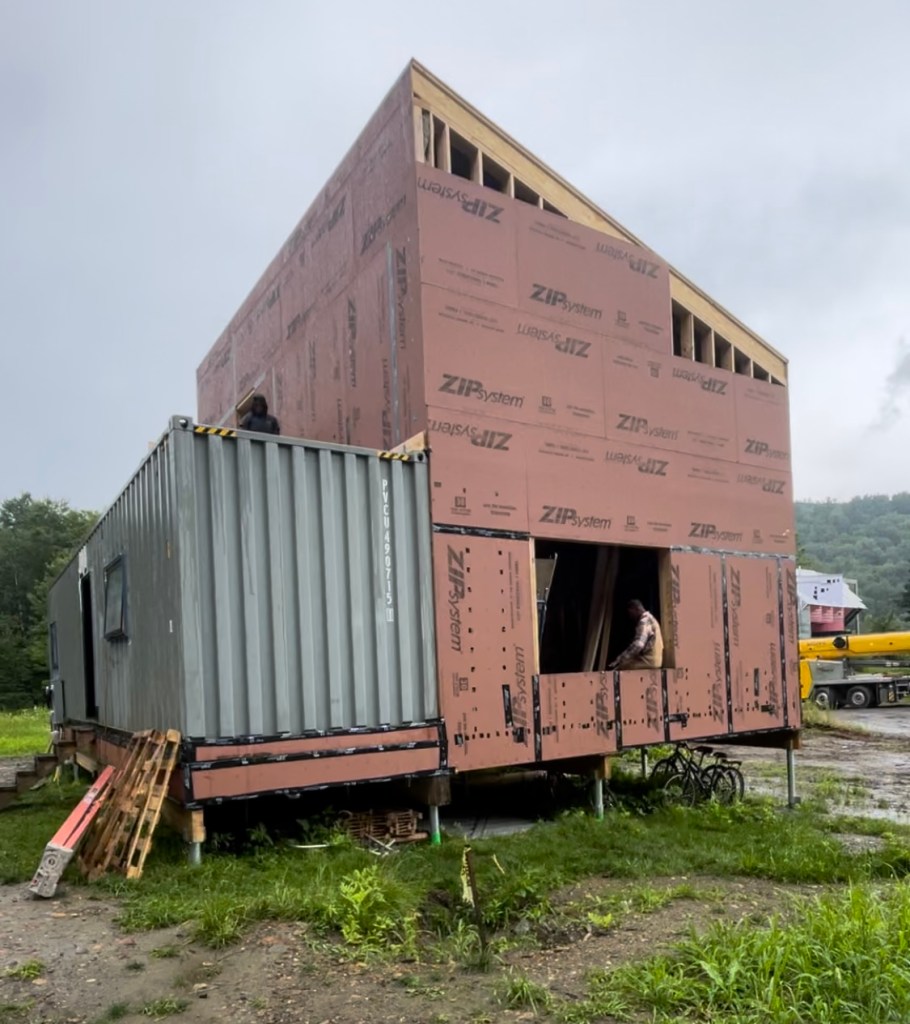
The Shipping Container Certificate is offered because four shipping containers were donated to Yestermorrow with the intent to be used to teach methods of construction that center reuse. Our project was designed and commissioned by a student of architecture who designed a hybrid stick frame + shipping container house for our summer build. After we finished our work, she and her husband finished the rest a moved in later that year.
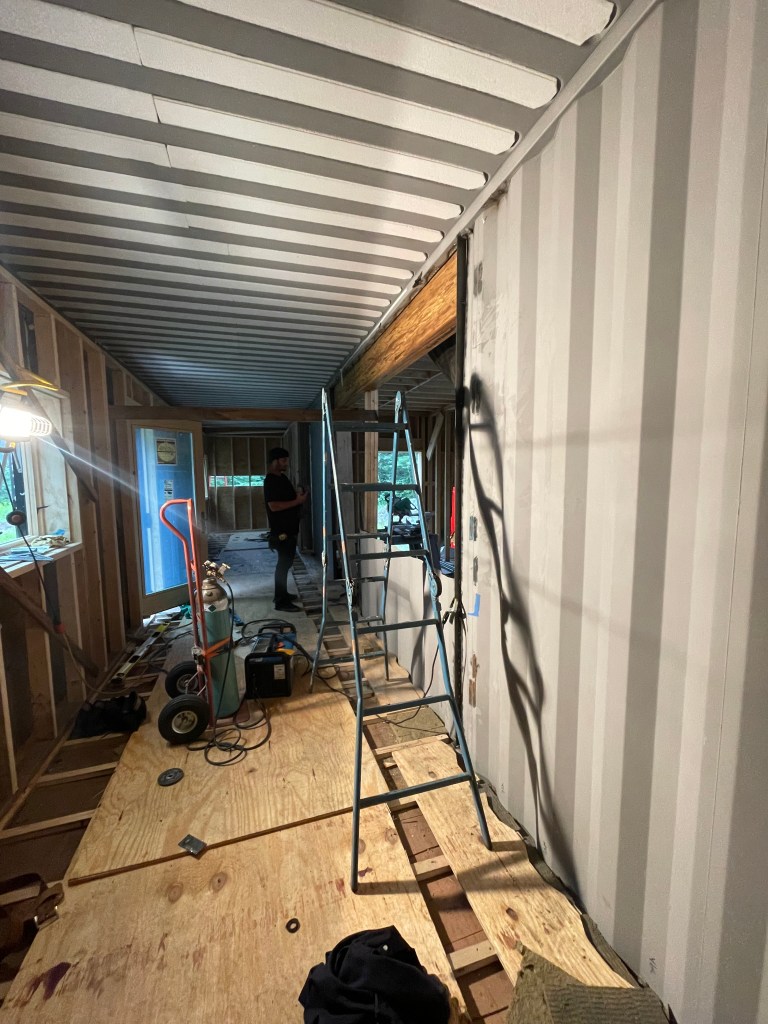
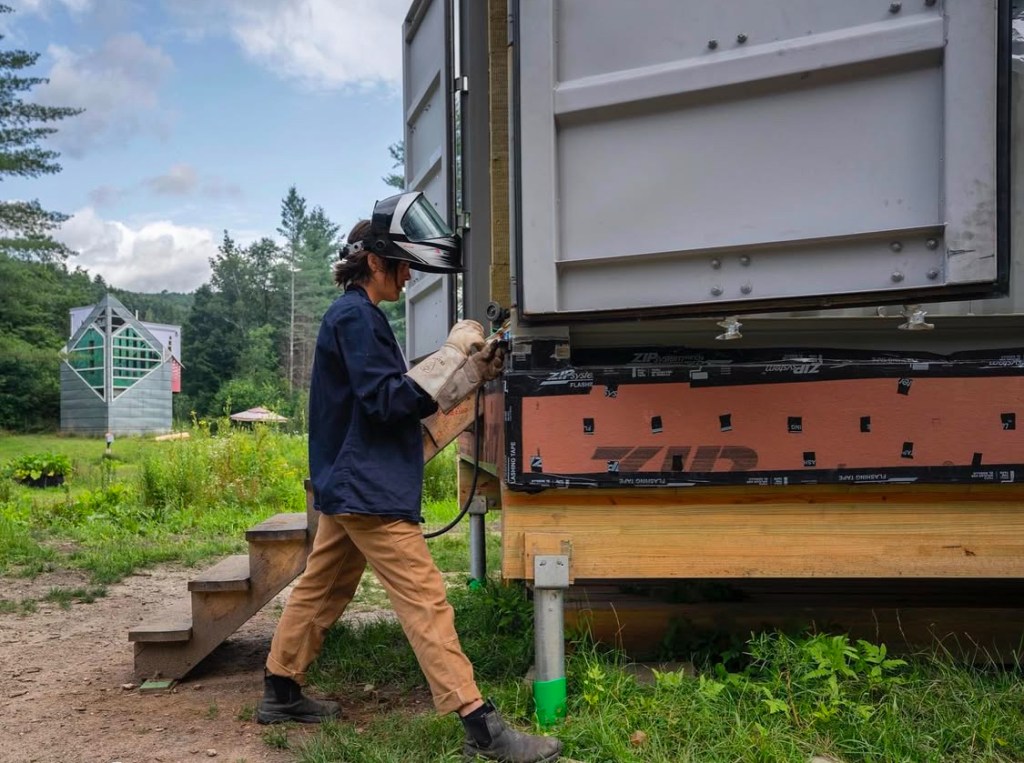
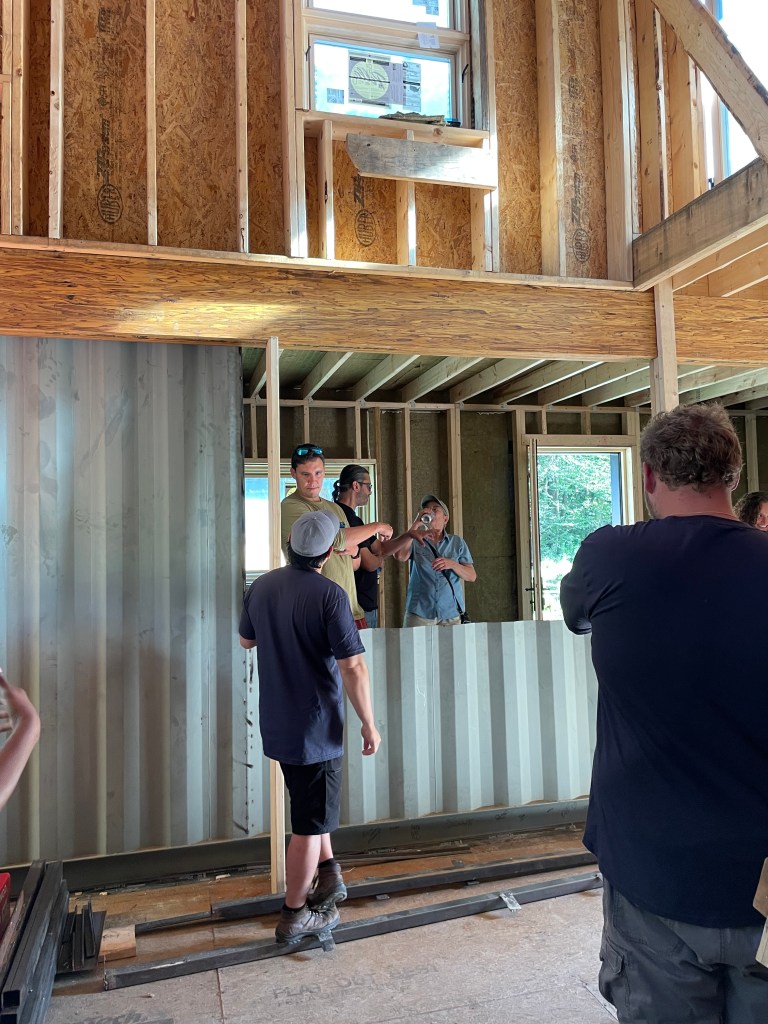
Shipping containers pose interesting challenges to convert into living spaces. They are metal and are therefore highly conductive. Vermont has extreme temperature fluctuations and is heating-dominant. Many people use spray foam to insulate, but the designer wanted to minimize petroleum-based products and the carbon footprint of the structure. Another issue is the structural makeup of a shipping container; they derive their strength from the corrugation. Rigidity and strength is compromised when it is cut into for windows and doors. Therefore every opening requires metal posts and framing.
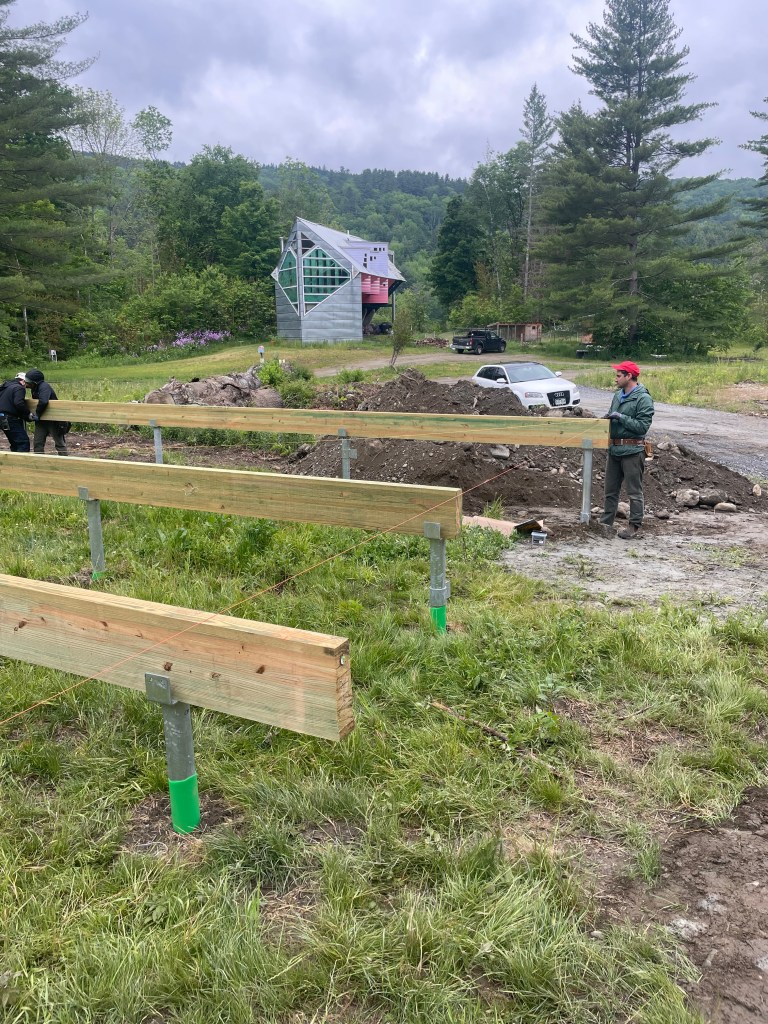
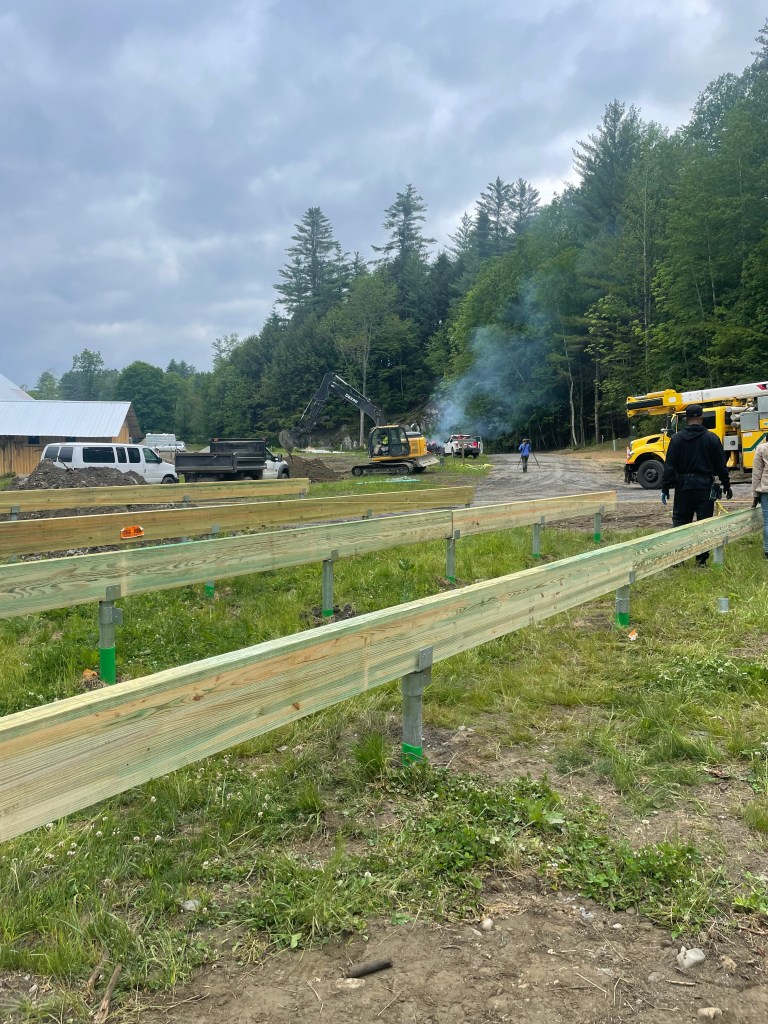
The project eliminated the used of concrete by using helical piles, or micro-piles. Here, the one man company Techno Metal Posts is driving 7’ links of galvanized steel piles into the ground. The goal is to reach a certain PSI which designates a certain bearing capacity of the pile. If that 7’ link does not reach the specified PSI he can add additional links to the pile, potentially extending it to 14’ or 21’ into the ground.
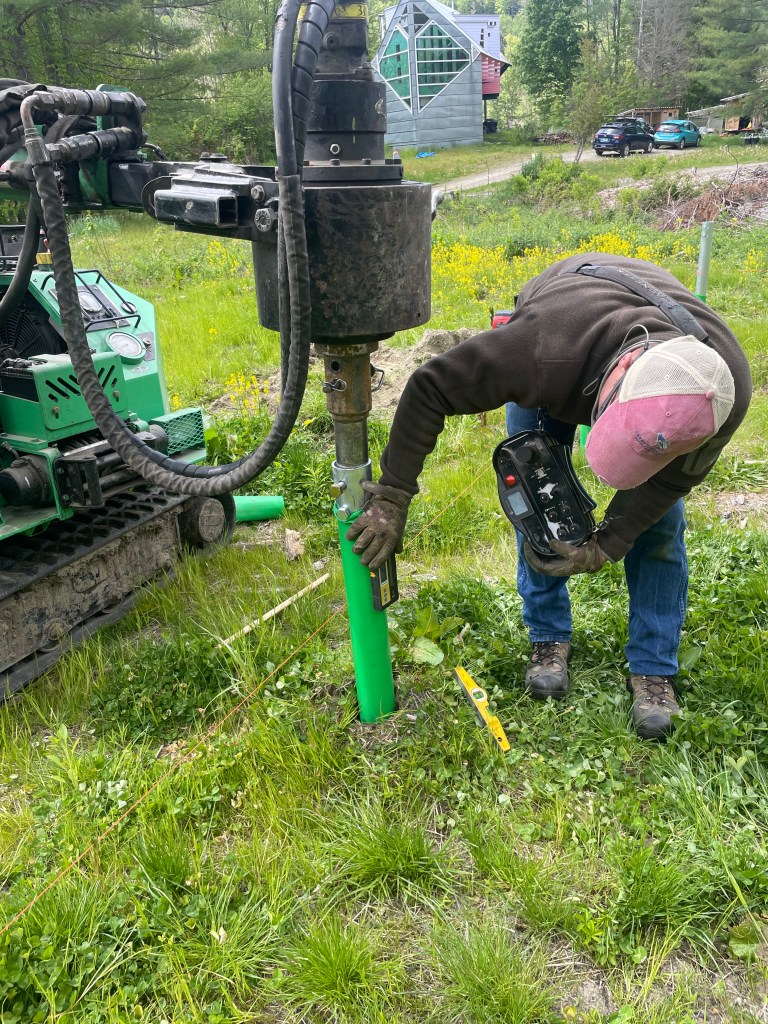
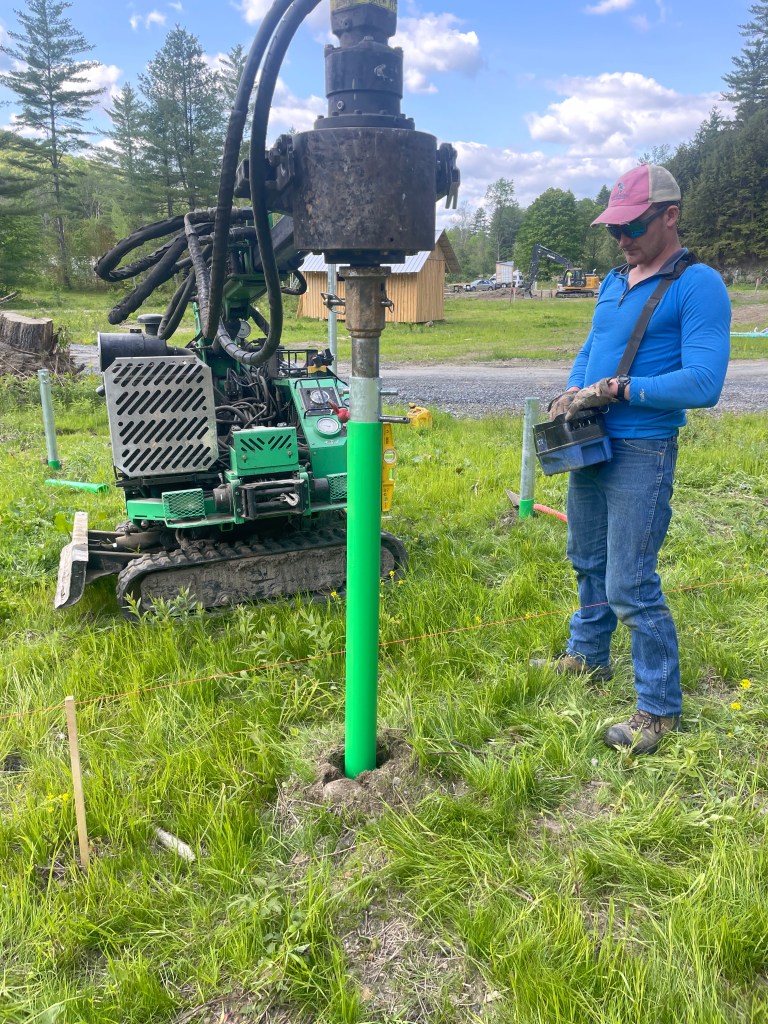
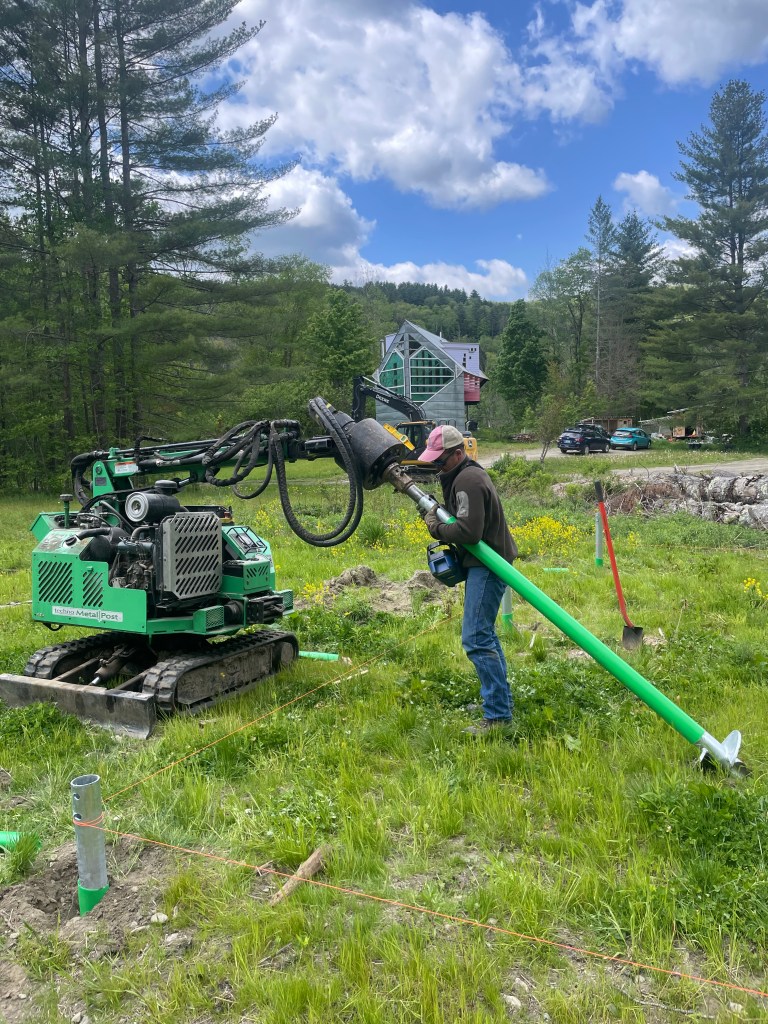

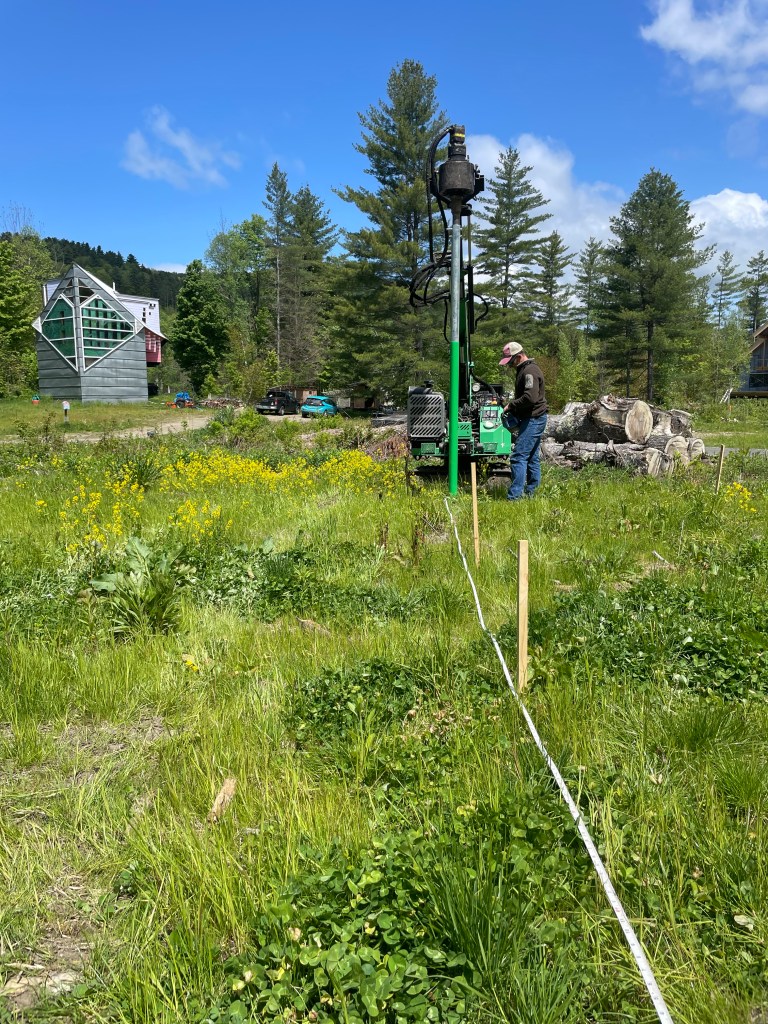
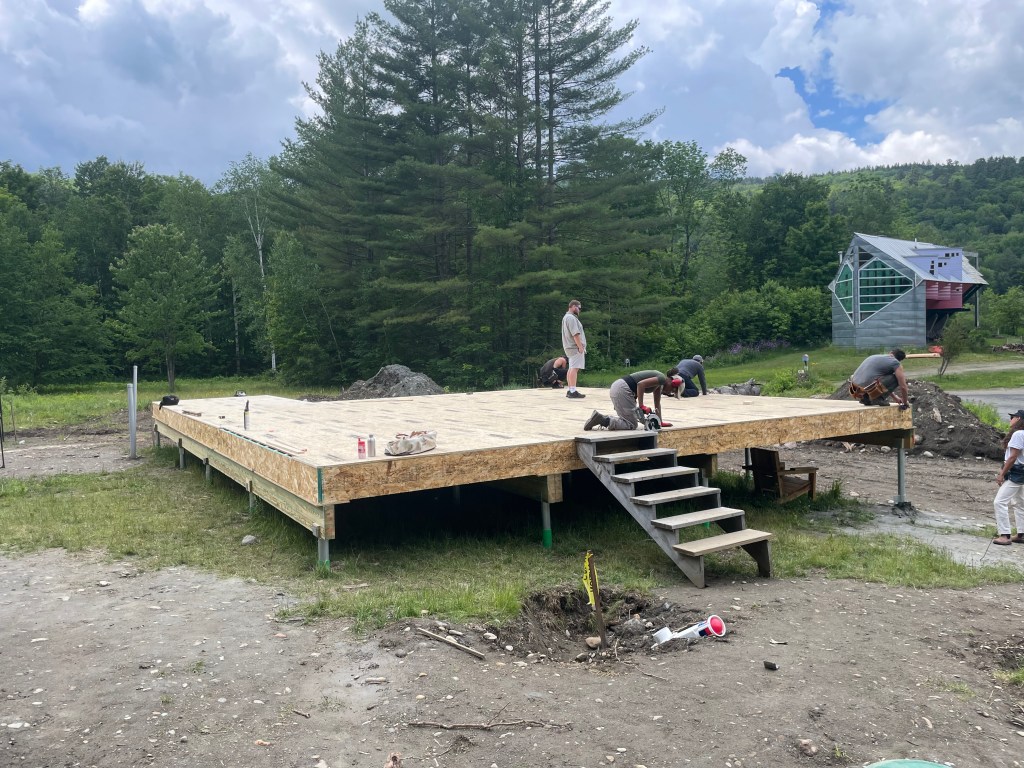
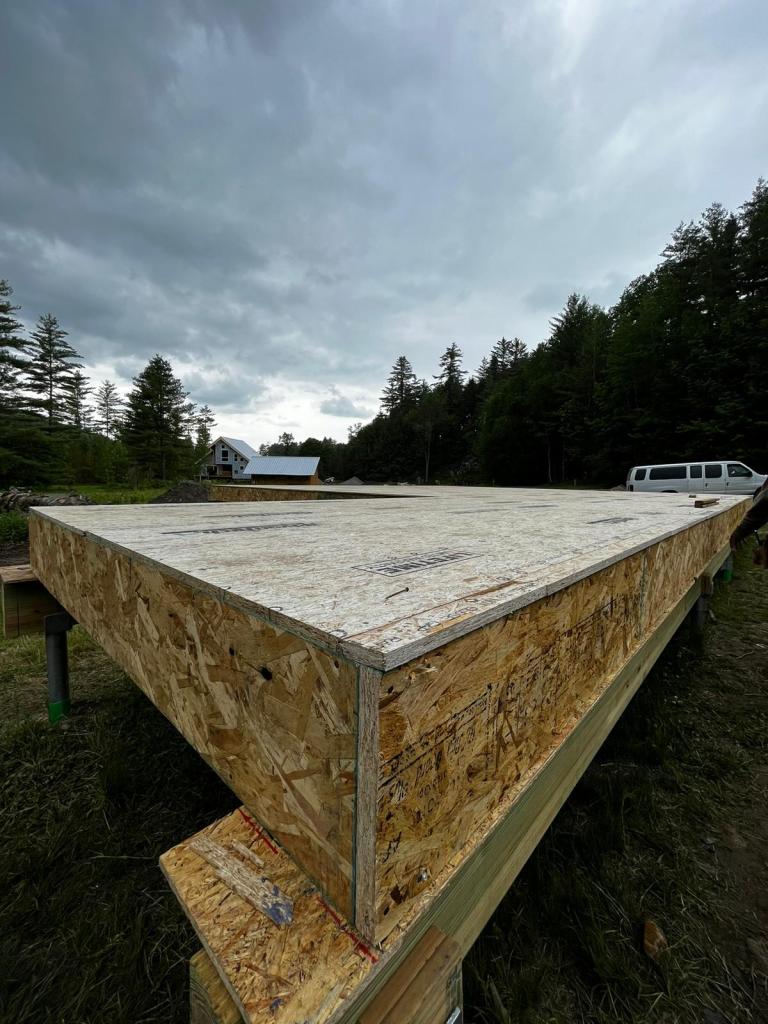
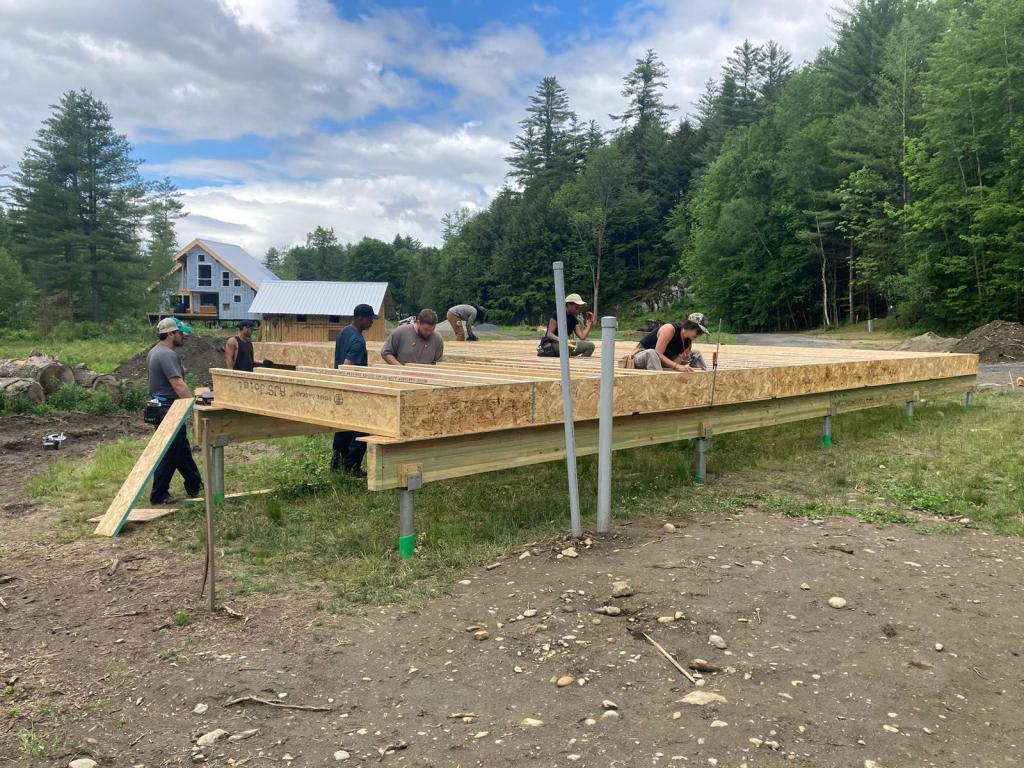
After the piles were level we installed PT glulam beams, I-joists, and then AdvanTech subfloor:
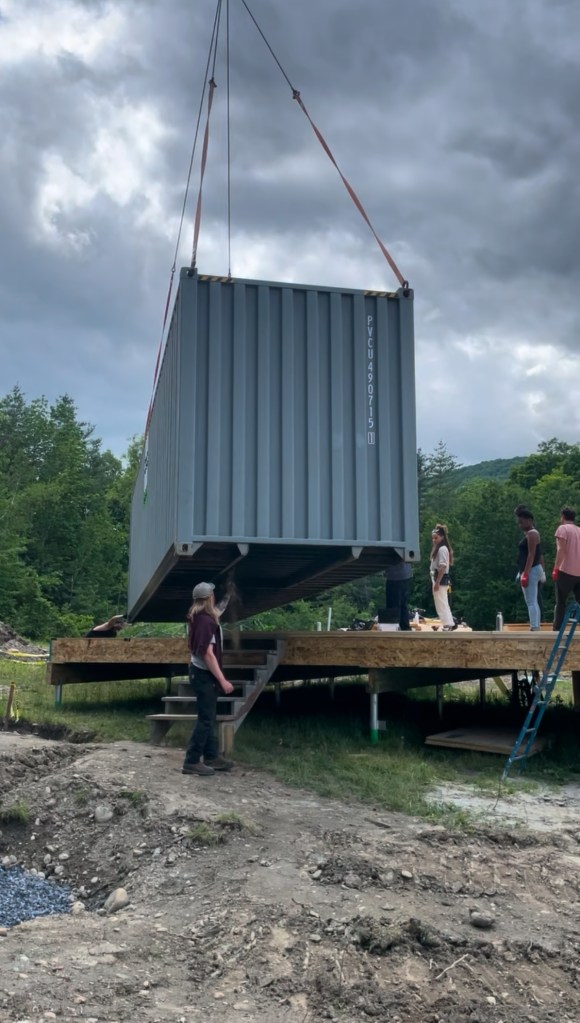
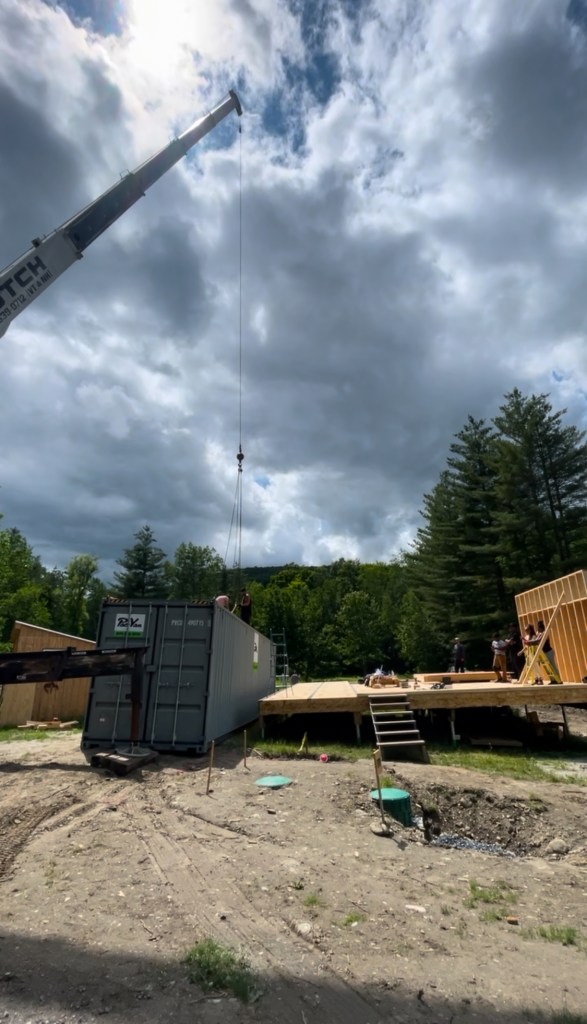
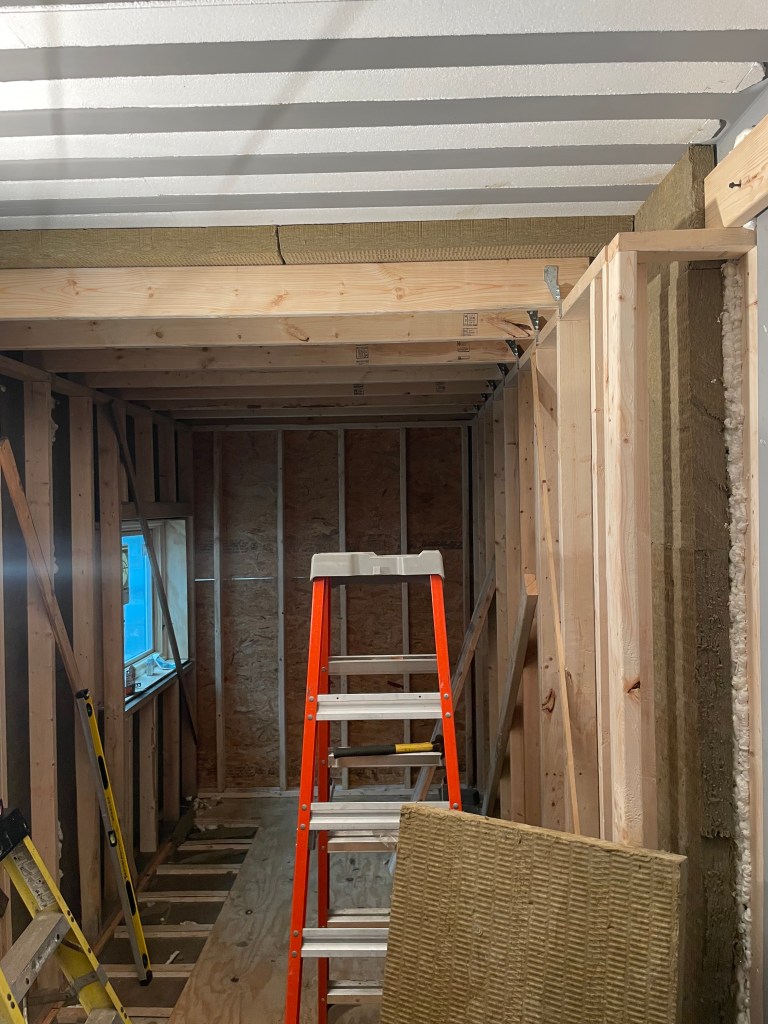
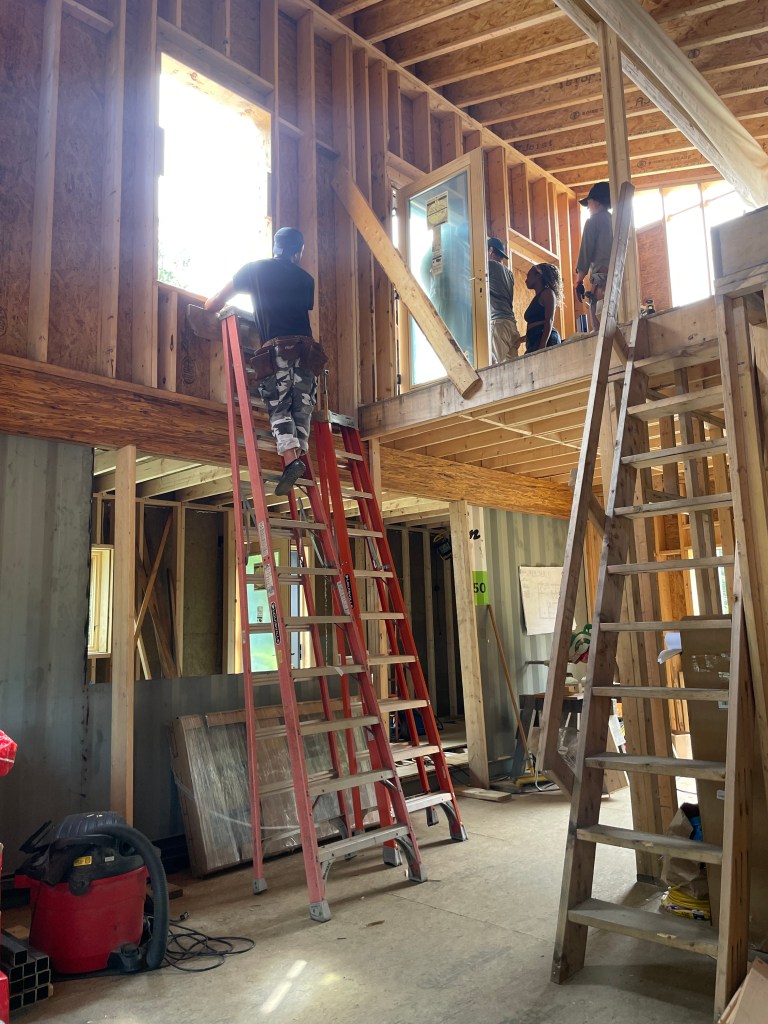
The shipping container was flown in and then insulated with InSoFast EPS foam made specifically for shipping containers. On top of that, 3” rockwool comfortboard, then 2×4 walls and ceiling to pin in the rockwool and provide cavities for blown-in cellulose. It is all sealed in with Intello plus vapor retarding membrane. The envelope will have a total R-value of 43.81. A the end of the day you end up building a mini stick frame house inside of a shipping container. Effectively the shipping container only acts as a cladding.
 angiexxallen.com