This week (Sept 5th) marks the conclusion of my first quarter and first studio course for a Masters of Architecture degree at Portland State University. Since my undergraduate degree is not in architecture, I am enrolled in the 3 year program rather than the 2 year program. Every quarter there will be a studio course in which all the other courses of that term revolve around. The studio course is where we make models, drawings, photo montages, collages, etc. of our individual designs. At the end of the term we present our design to a panel of mostly unknown reviewers.
This quarter our project site was South Hawthorne Waterfront Park, the last stretch of undeveloped beach in downtown Portland. For 8 weeks we engaged with this site through three assignments. We were a cohort of 6 students, all who have never taken an architectural studio class before.
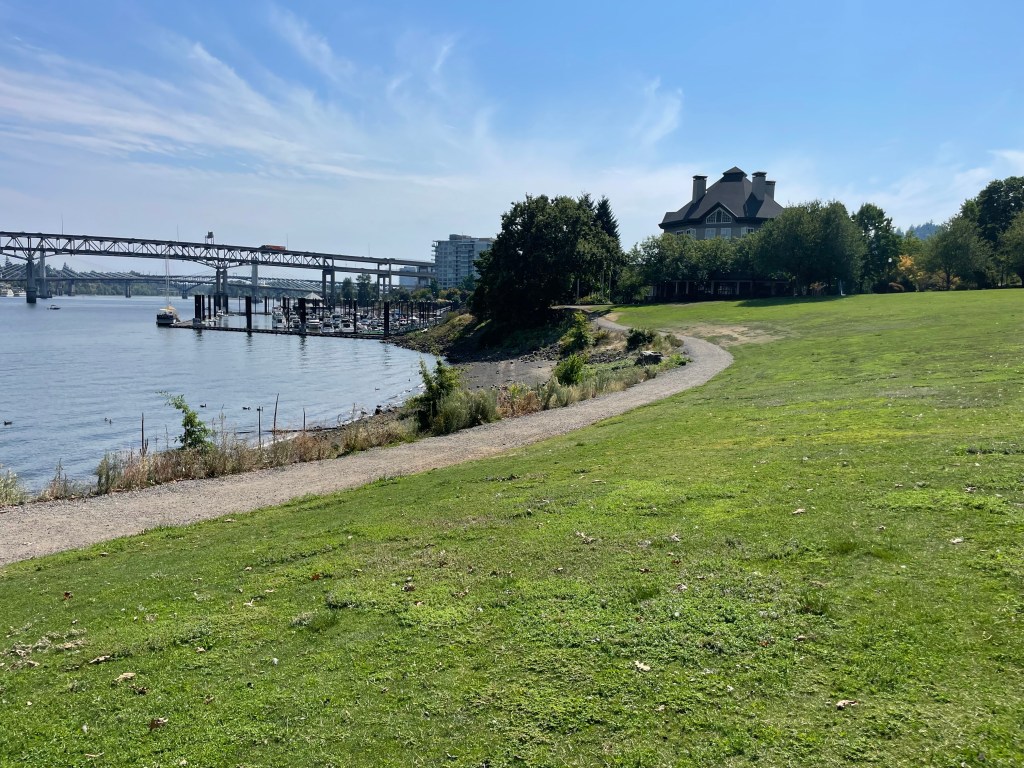
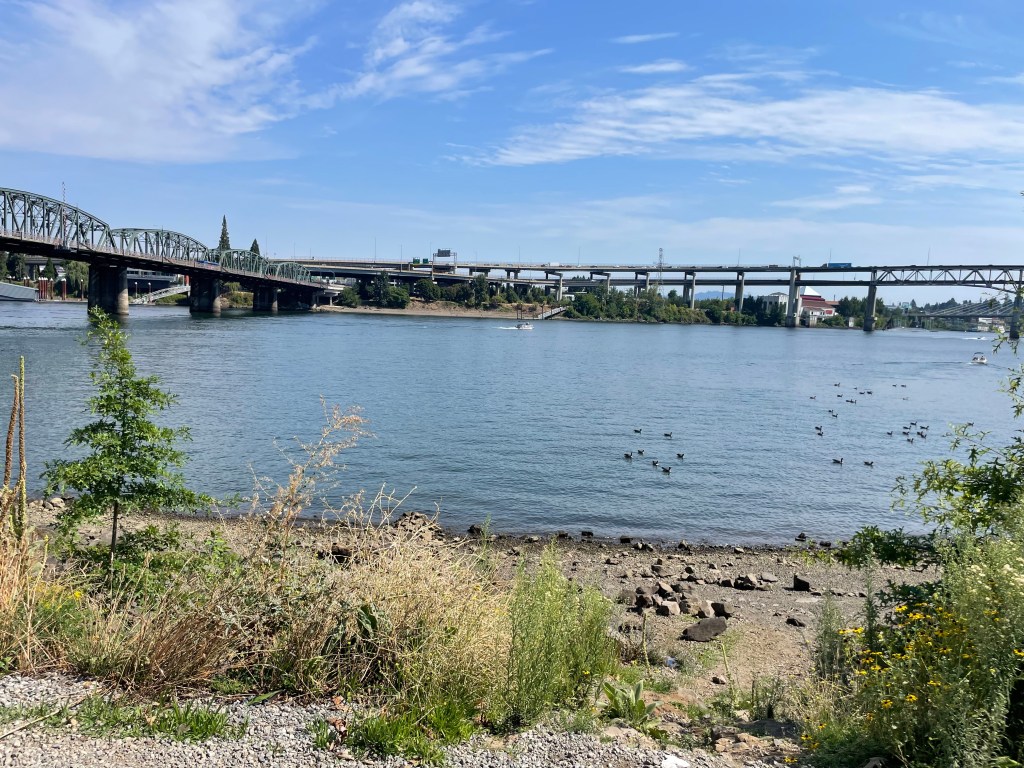
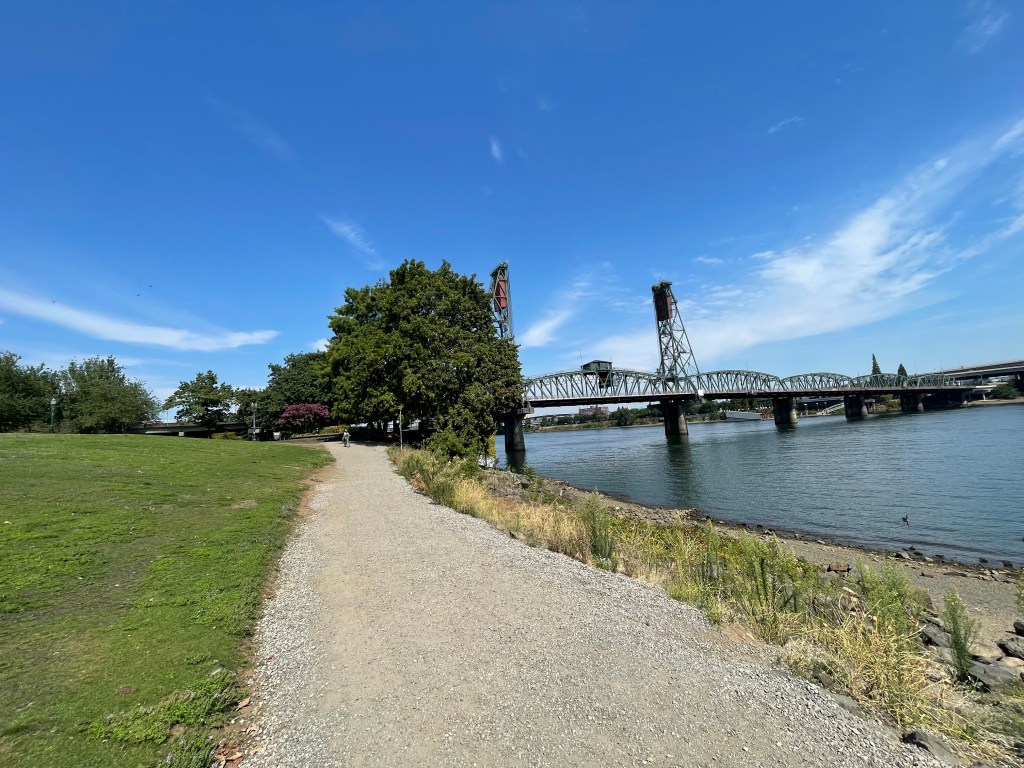
For our first assignment we broke up into 3 groups of 2 people to research the site. Each group depicted that research pictorially on transparencies, and layered our drawings so all images can be seen at once while still existing on separate planes. Each group chose an area of research: geological history of the site prehuman settlement, precolonial structures and colonial infrastructure, and a lighting and heat map of use today.
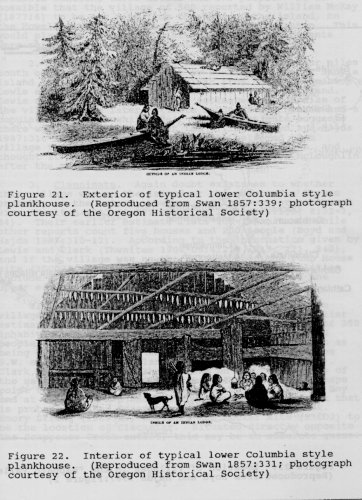
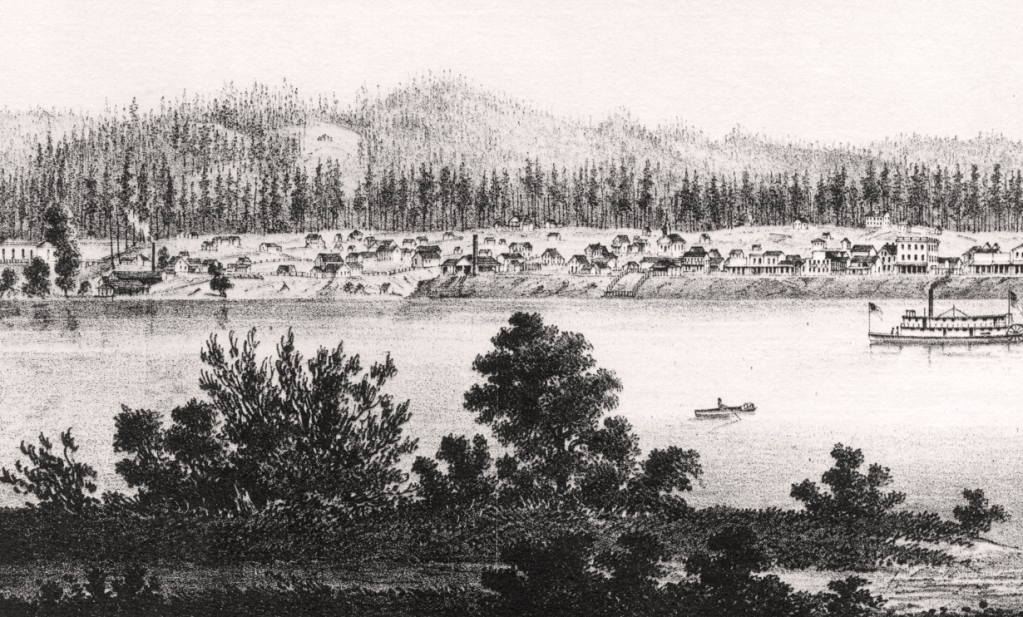
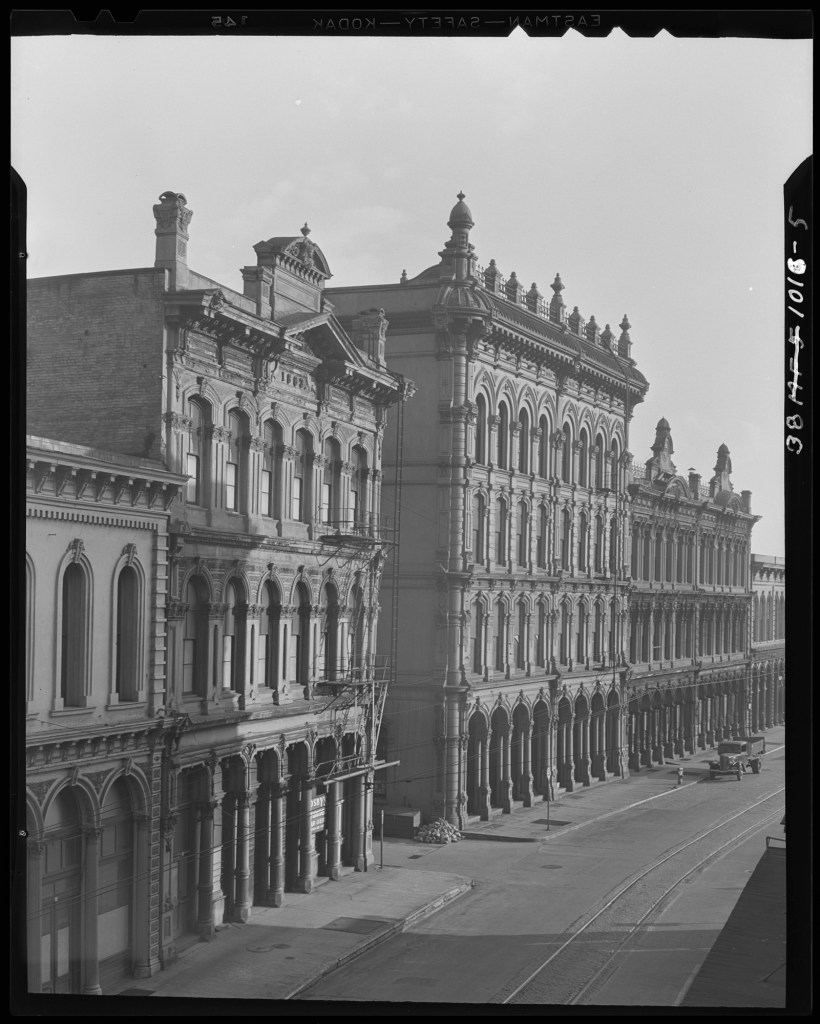
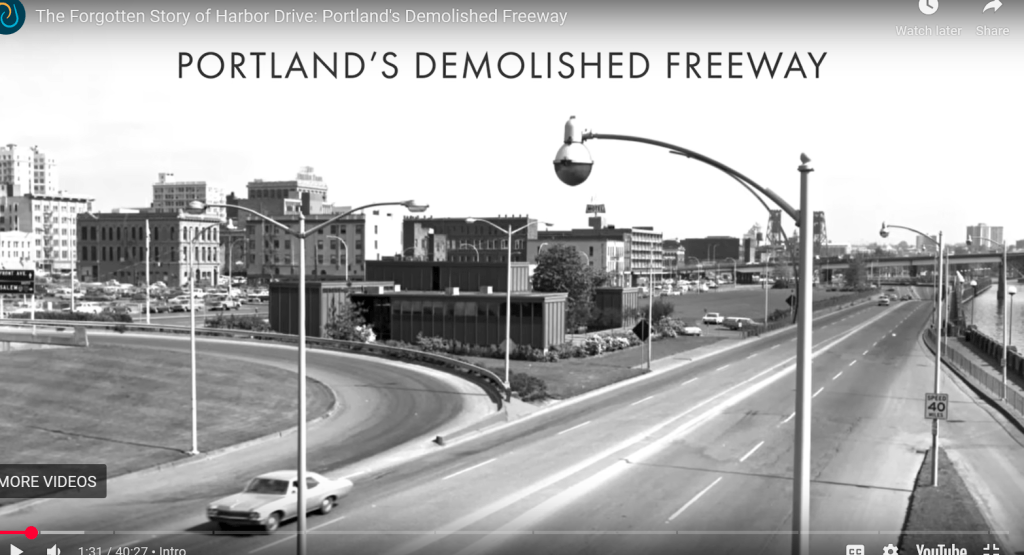
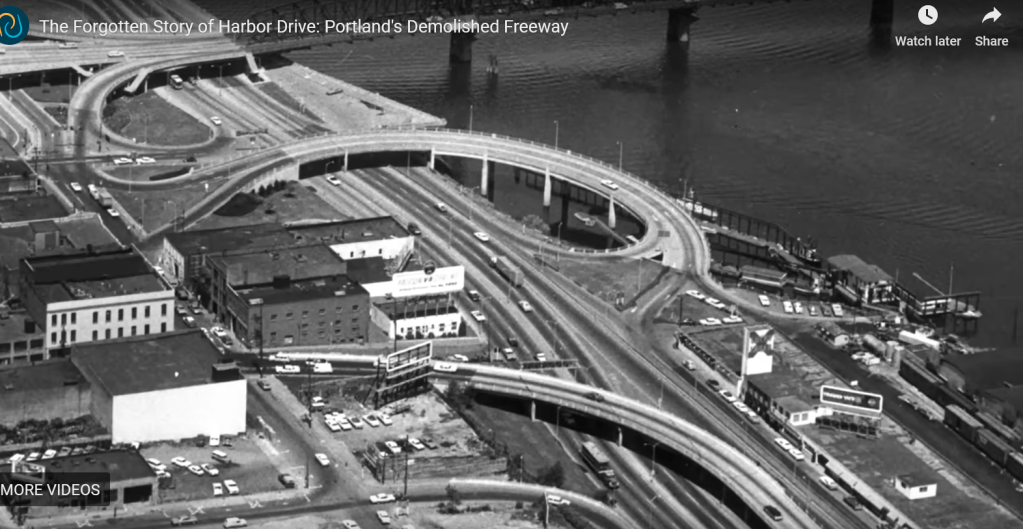
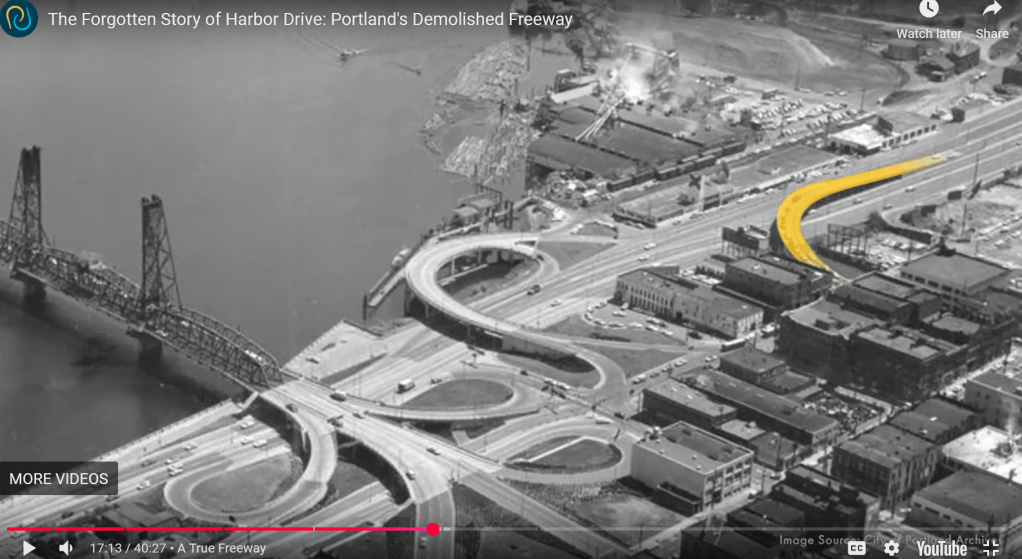
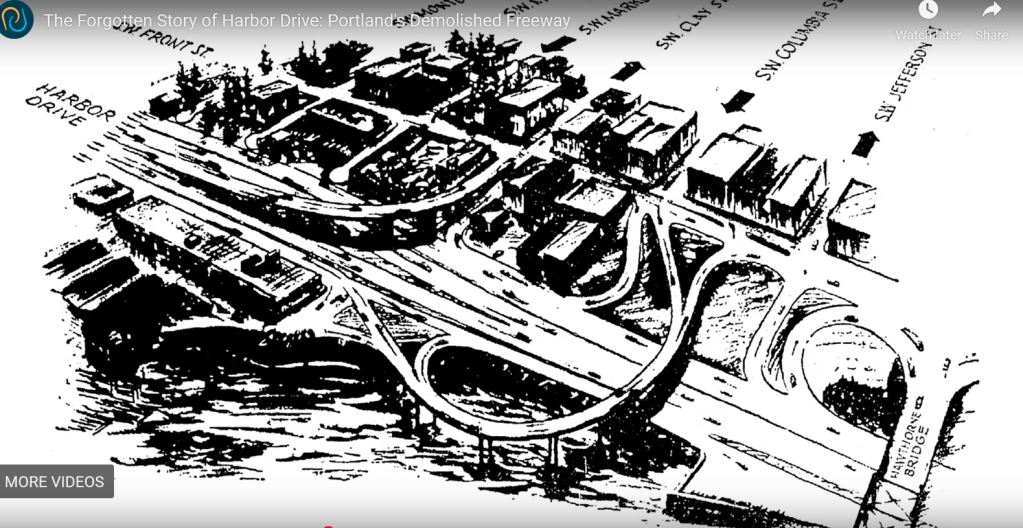
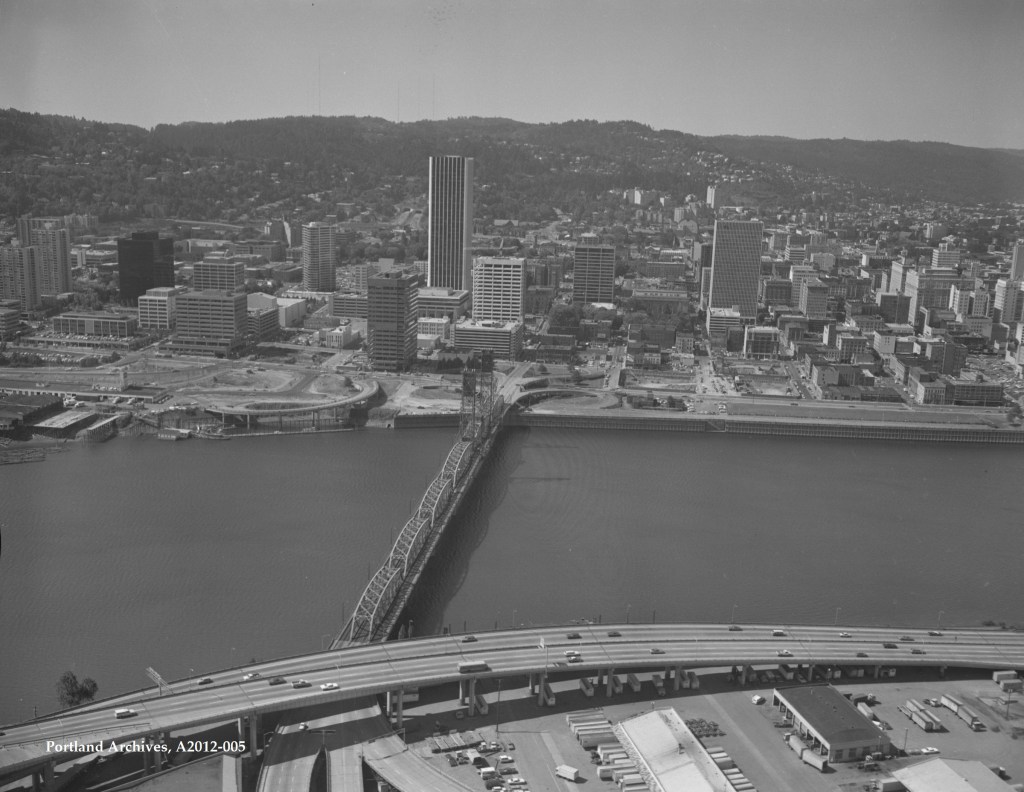
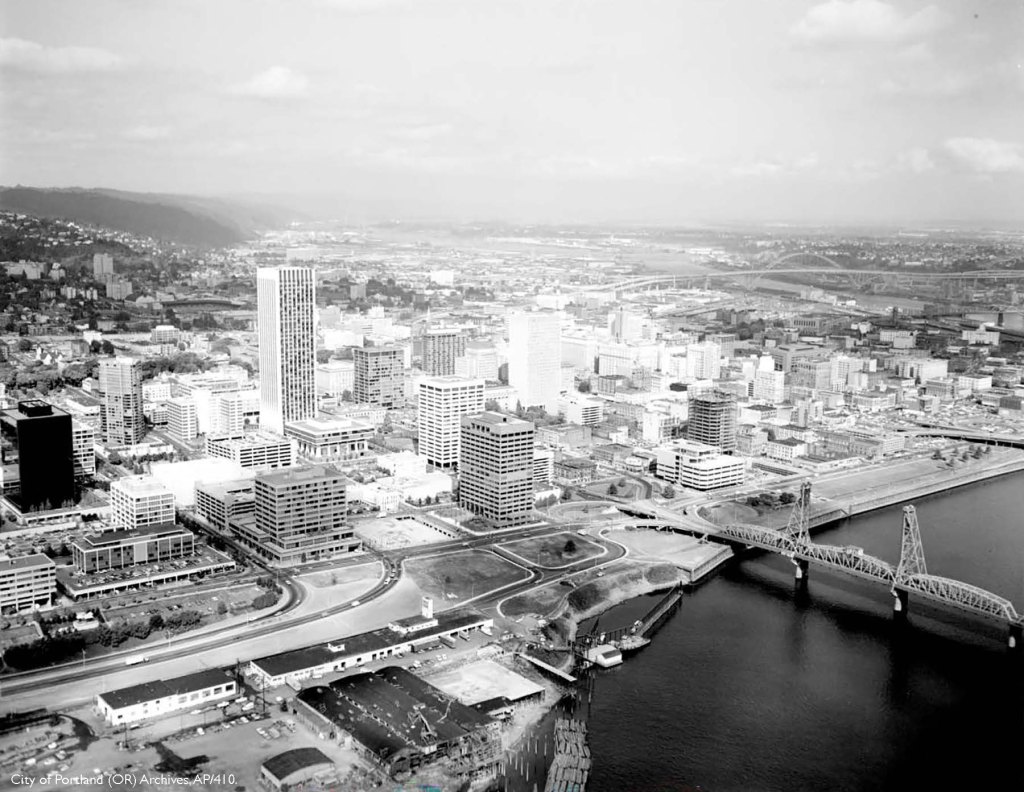
Here are images I gathered for the historical infrastructure layer: Chinook and Kalapuya longhouses all along the Columbia and Willamette waterfront in the early 1800s (first image), the first colonial-settler structures built after 1843 in what is today downtown portland (second image), the 1940s iconic cast-iron buildings all along Front Avenue which were demolished to make way for what became Harbor Drive Highway (third image), Harbor Drive highway existed from 1940-1973 (images 4-9). In the 1970s the freeway was demolished and since 1973 that site is Waterfront Park. Sitting in the park today, it is difficult to feel that – all of its iterations throughout time. Really, what is beneath the grass is an immense amount of industrial fill and manufactured underdevelopment.
Our second assignment was to individually choose a place on the site and host a course in a six course meal. The guests would navigate the site through this six course meal. My course was the first: the aperitif. The idea is that the guests would enter the site from a kayak and land on the beach where they would be invited to sit down and drink home-brewed “kombucha”:
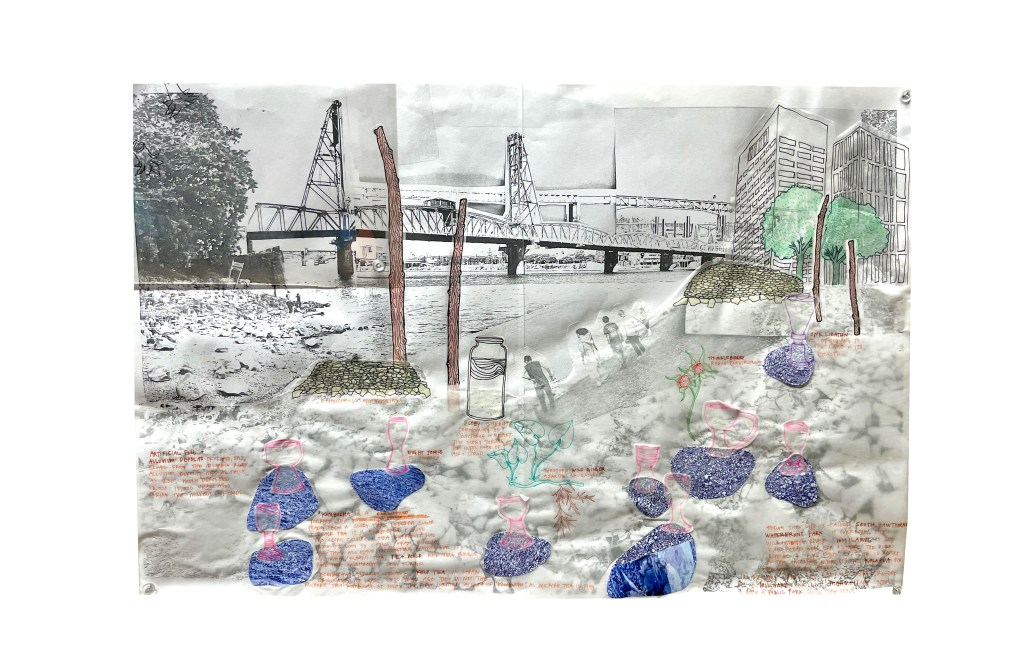
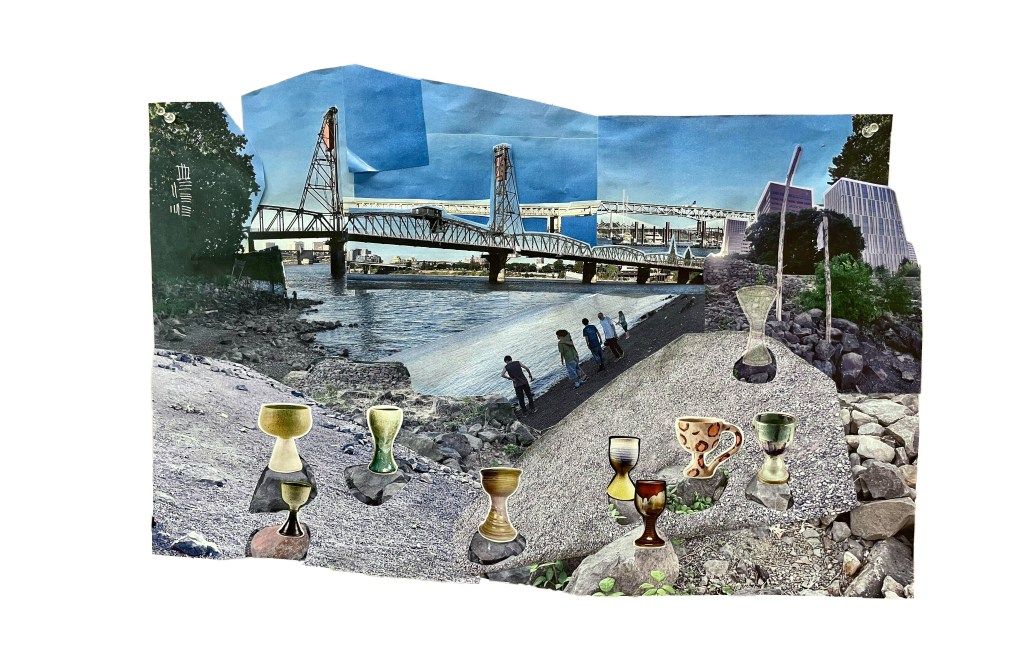
The third and final phase for the studio was to design a pavilion that incorporates our site research and guest/host dynamic established in the meal. The pavilion must include: two thresholds and pathways for entering and exiting, a locked portion of the pavilion for reservation, an open air public space available at all times, ADA bathrooms, a small kitchen and storage space.
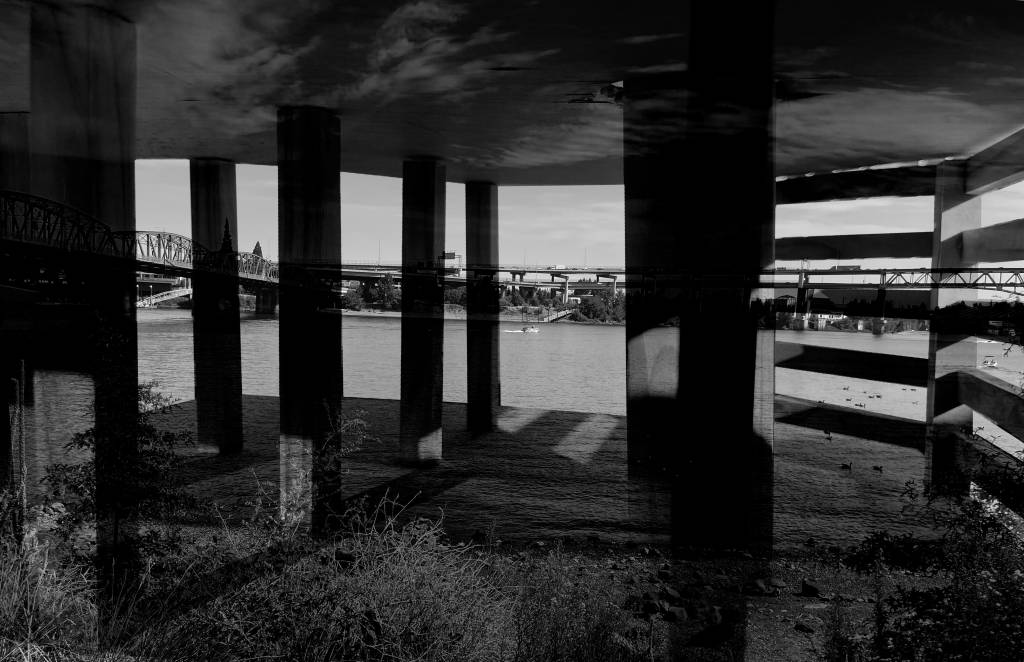
What follows is the presentation:
Throughout this quarter we spent a lot of time learning about the history and architectural heritage of Portland. This pavilion was designed in conversation with that history. It is often that events fraught with tension make history and become a part of the shared story we tell ourselves about our culture and place of residence. This pavilion is a result of wrestling with those tensions, and dreaming of alternatives and offerings to ease the wounds of a painful history and fraught present.
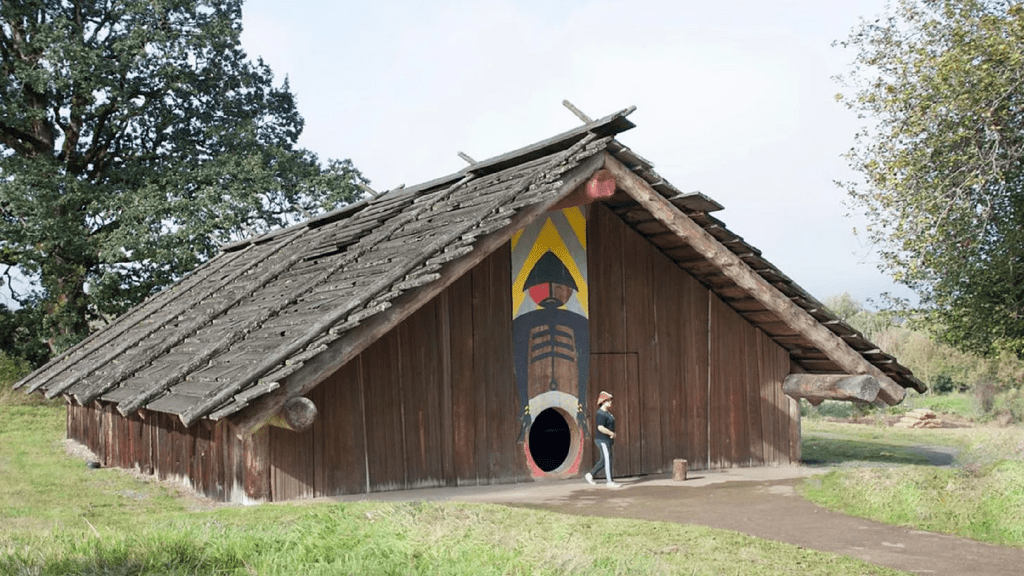
The historical context and architectural heritage of this place, and specifically South Hawthorne Waterfront Park, is the traditional home of Kalapuya and Chinook people who built plankhouses: long gabled wooden structures along the river bank. Interestingly, Chinook people would dismantle the plank siding and roofs of their winter plankhouses, leaving only the structural frame, and sometimes submerge them in water for the non-winter months to preserve them. Cathlapotle plankhouse:
The first Euro-settler structure was built in 1843 and set the stage for a new chapter of settler-colonialism. As we all know, what followed was mass destruction, violence, and clear cutting. By 1857 portland was already known as “stumptown.” Comparing the architectural approaches of these two eras: I see it as a dichotomous hardening and softening (among other things!). Chinook people moved seasonally, dismantling their winter homes, submerging them in water to prevent rot, and settlers built “permanent” structures along the river front that would fail depending on the season.
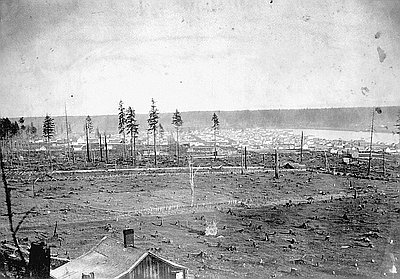
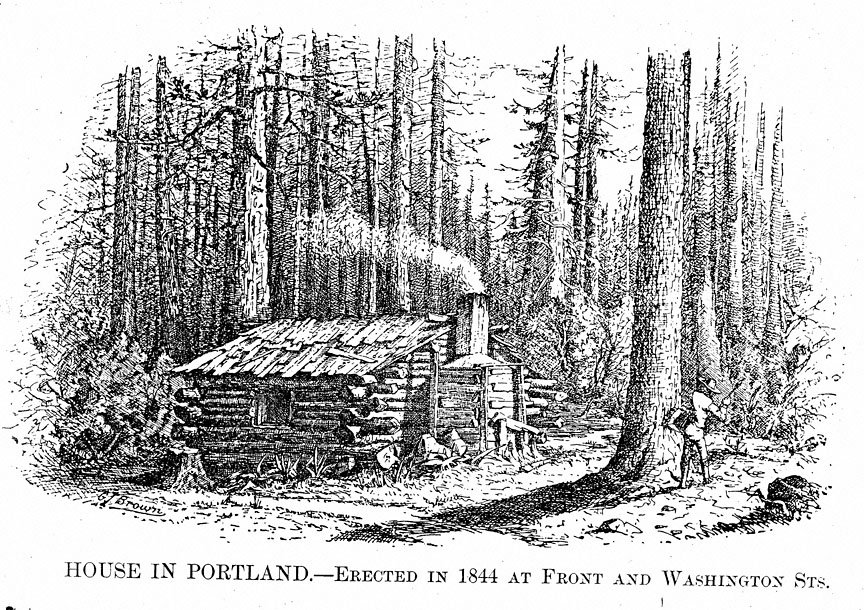
This impulse for permanence, stability, and hardening against an unpredictable force of nature is a through-line in the history of western design approaches. In 1929 the seawall was completed (35’ deep wooden cribs submerged in the willamette supporting the concrete wall we see along waterfront park). In the 1940s a highway system was built over waterfront park, and then torn down in the 1970s. This site has only been a park since 1978.
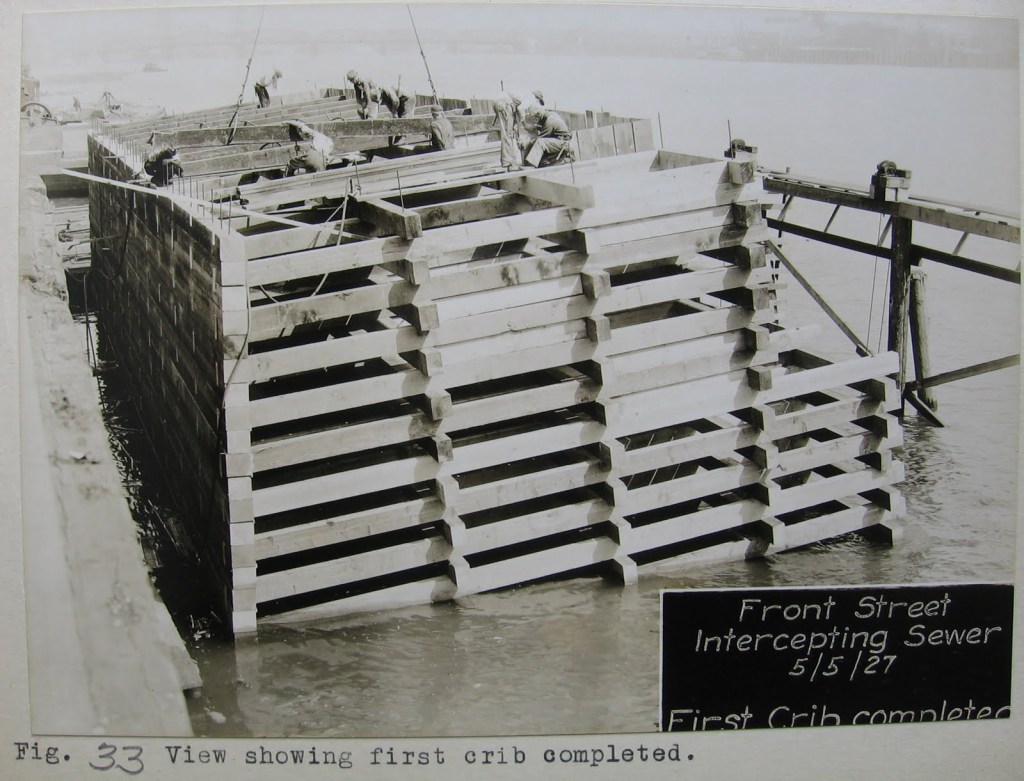
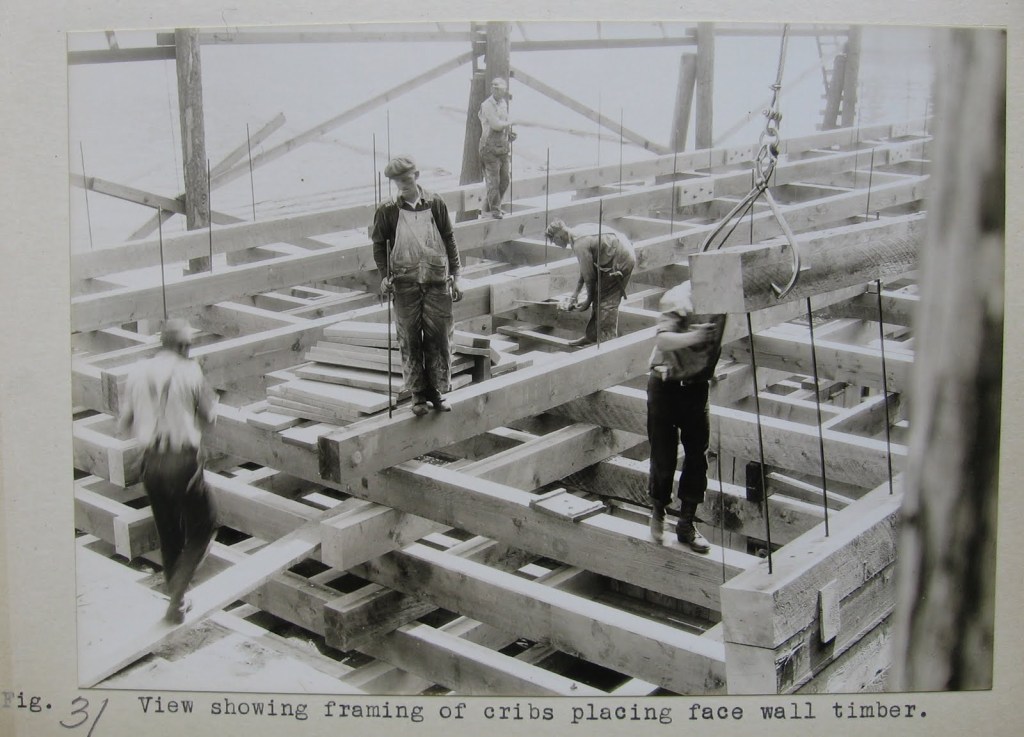
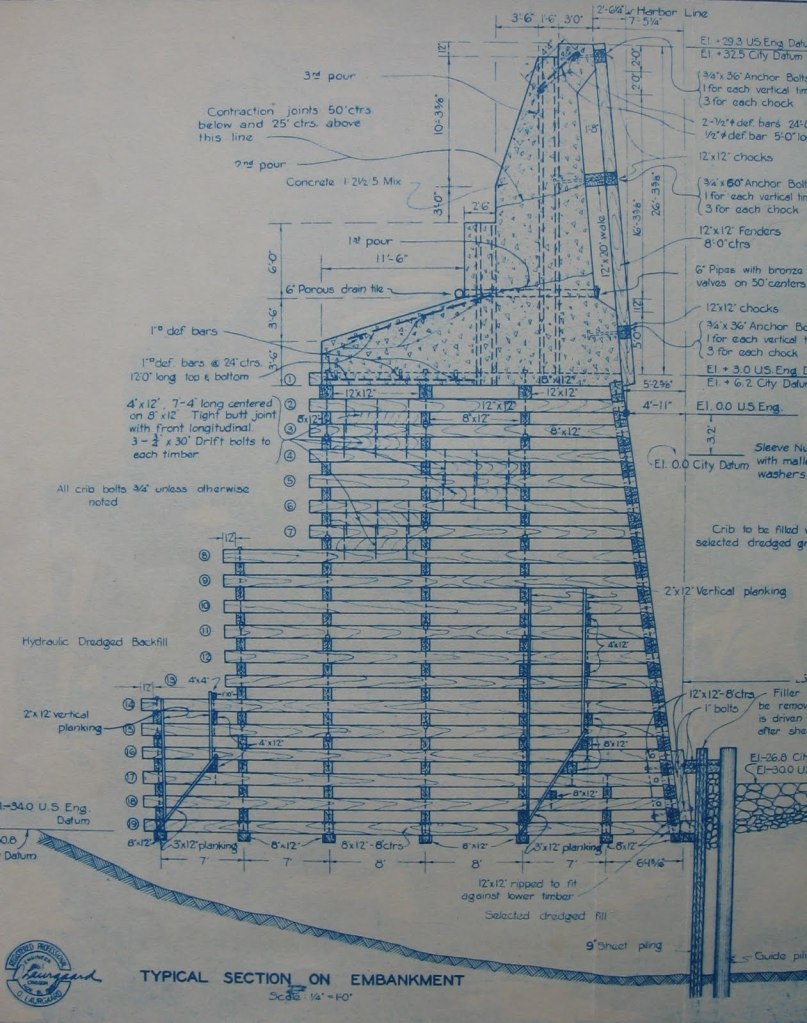
Presently, we are engrossed in a highly engineered world, and surrounded by architectures that are in my opinion alienating: materials are mysterious and ageless (enameled aluminum and steel, epoxy, vinyl, etc.) In Eyes of the Skin by Juhani Pallasmaa, he advocates for haptic architectures that are made by the body, for the body and incorporate all the senses, particularly touch. Haptic architectures use materials that exhibit their life and age, like wood and stone. The following quote from Eyes of the Skin expands on the tension of our times:
The growing experience of alienation, detachment and solitude in the technological world today may be related with a certain pathology of the senses. It is thought-provoking that this sense of estrangement and detachment is often evoked by the technologically most advanced settings, such as hospitals and airports. The dominance of the eye and the suppression of the other senses tends to push us into detachment, isolation and exteriority. The art of the eye has certainly produced imposing and thought-provoking structures, but it has not facilitated human rootedness in the world
In regards to my design in South Hawthorne Waterfront Park, I first want to address that we are guests, the land is the host, and this land holds the memories of time. My goal is for this design to reflect that sentiment through:
- Environmentally responsible construction methods such as:
- Decreasing concrete by using micro-piles
- Structural Round Timbers (SRT) + Dowel Laminated Timber (DLT) + mass timber
- Passive solar gain and ventilation: the west side limits fenestrations
- Creating public offerings with pergolas of kiwi and grape vines flanking the entry and exit pathways, two public restrooms, an open air pavilion
- Embracing porosity and an ethos of repair
- Celebrating haptic, wooden and handmade structures. Asking what can trees and wood teach us? What can working with our hands teach us?
- The floor plan mirrors the 80 degree angle of the seawall. Mirroring it acknowledges the history it is born from, but through its porosity it proposes a different way to engage with its site, place, people.
- Designing for a human rootedness in the world
Throughout this design I was considering ideas of anti-permanence, anti-rigidity, and porosity as a response to the fortressness of the seawall. “Sustainable” construction often incorporates longevity targets, designing say the 300 year old building. Is this sustainable? What would it look like to embrace an Ethos of Repair rather than permanence?
Collages of my model against the backdrop of south hawthorne waterfront park:
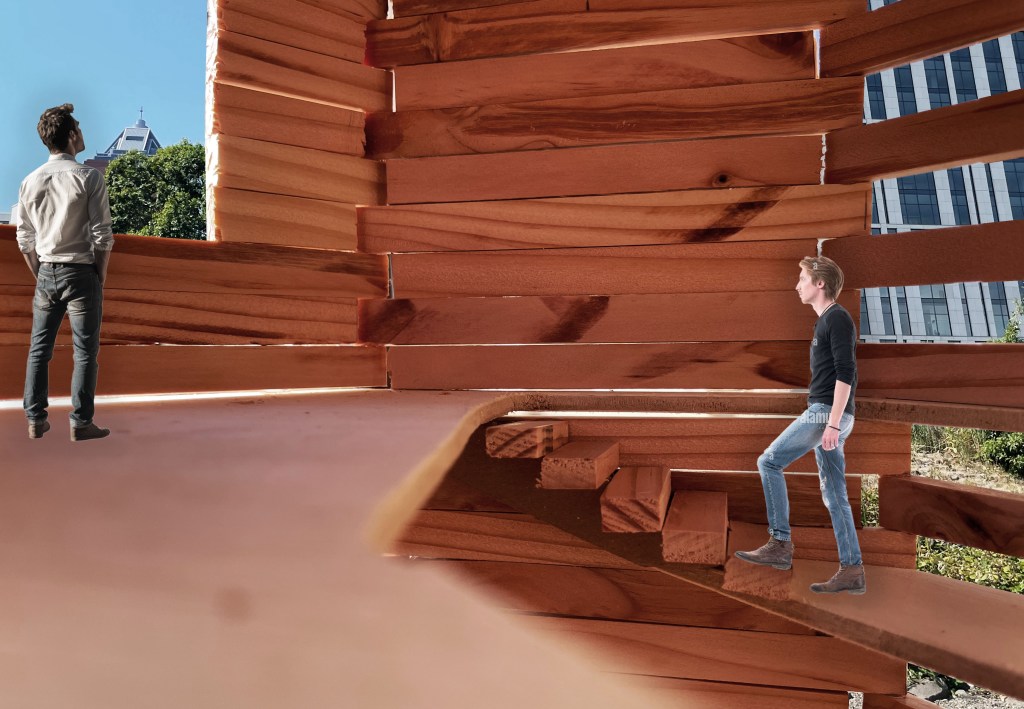
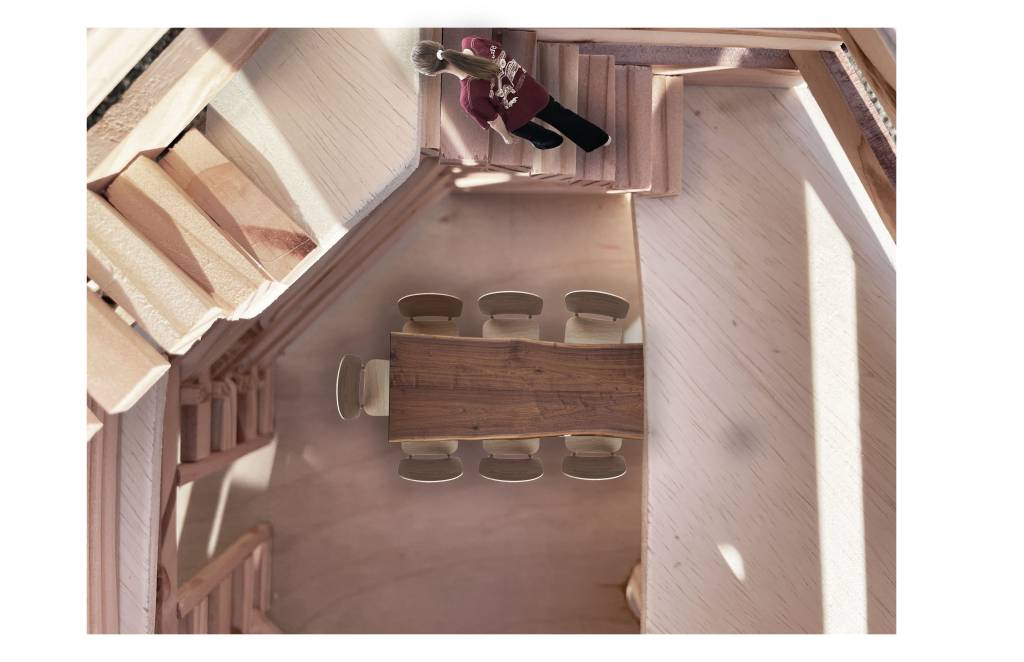
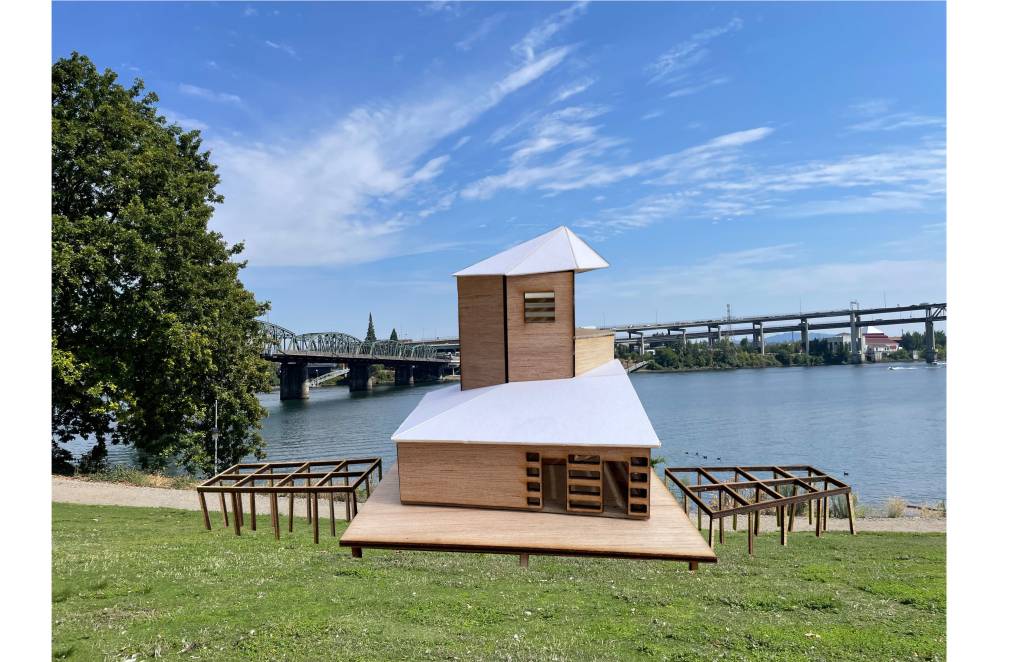
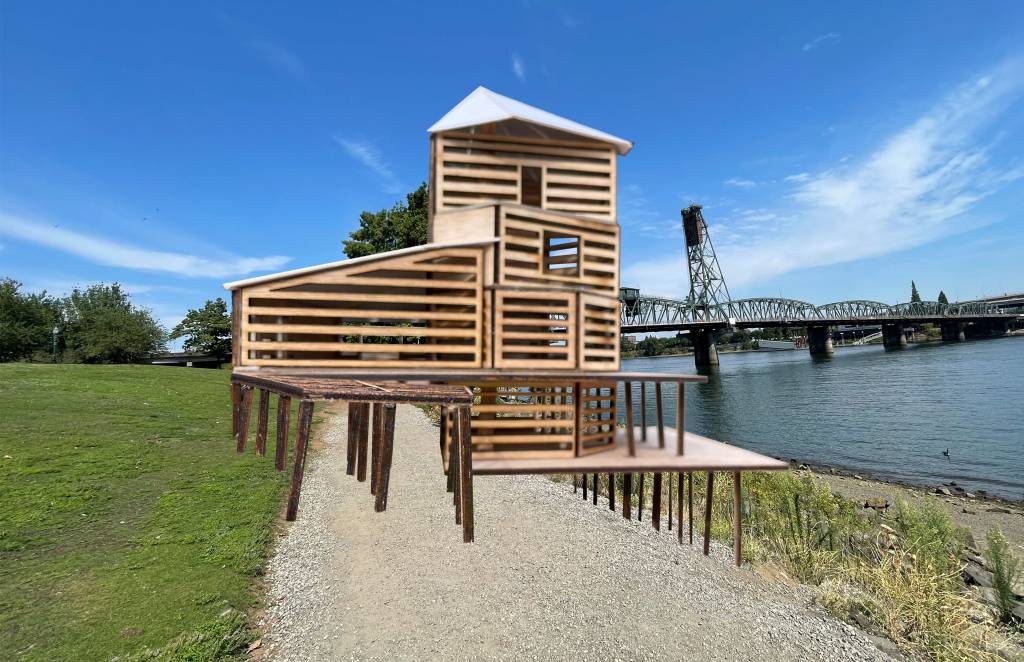
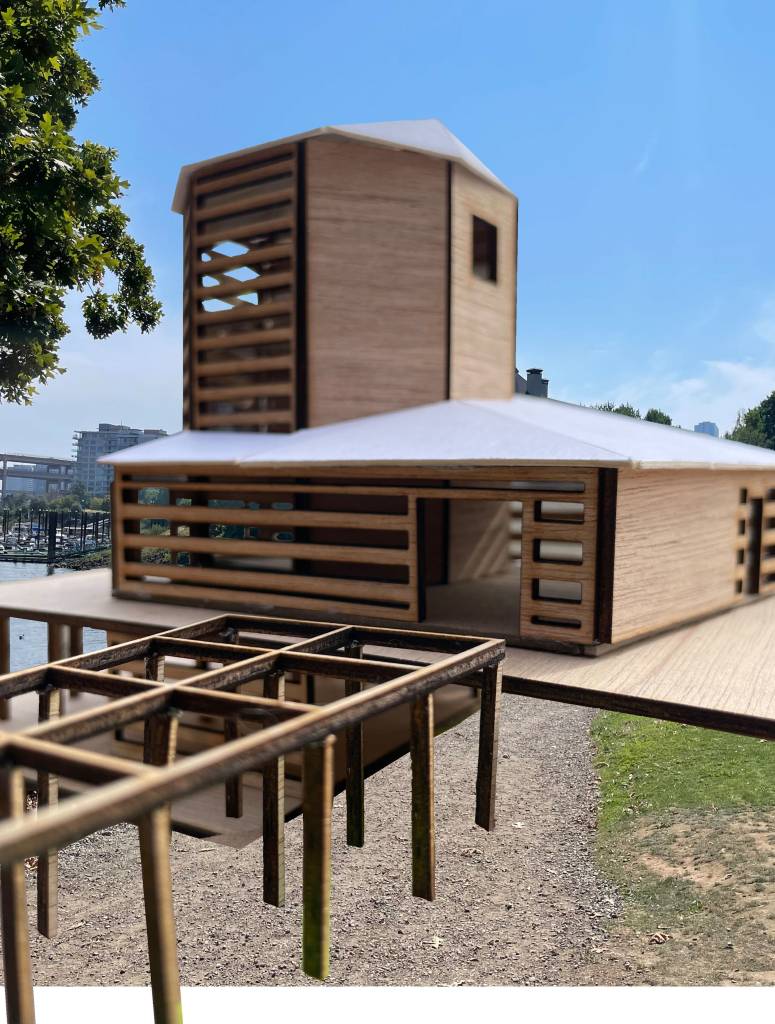
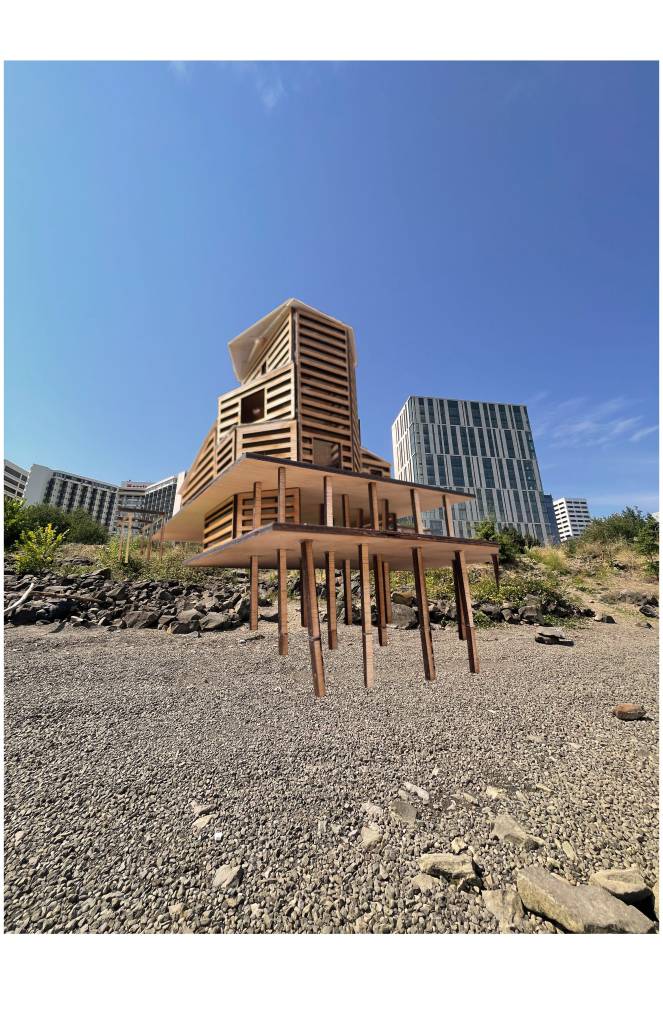
This building would require repair programing probably every 20 to 30 years. The programing would be in partnership with PSU and PCC architecture and construction students. Through a timber construction and restoration course, students can learn about restoration and repair rotted elements in this structure.
Images one 1/8”: 1’ scale model, one 1/4”:1’ scale model, a floor plan and longitudinal section:
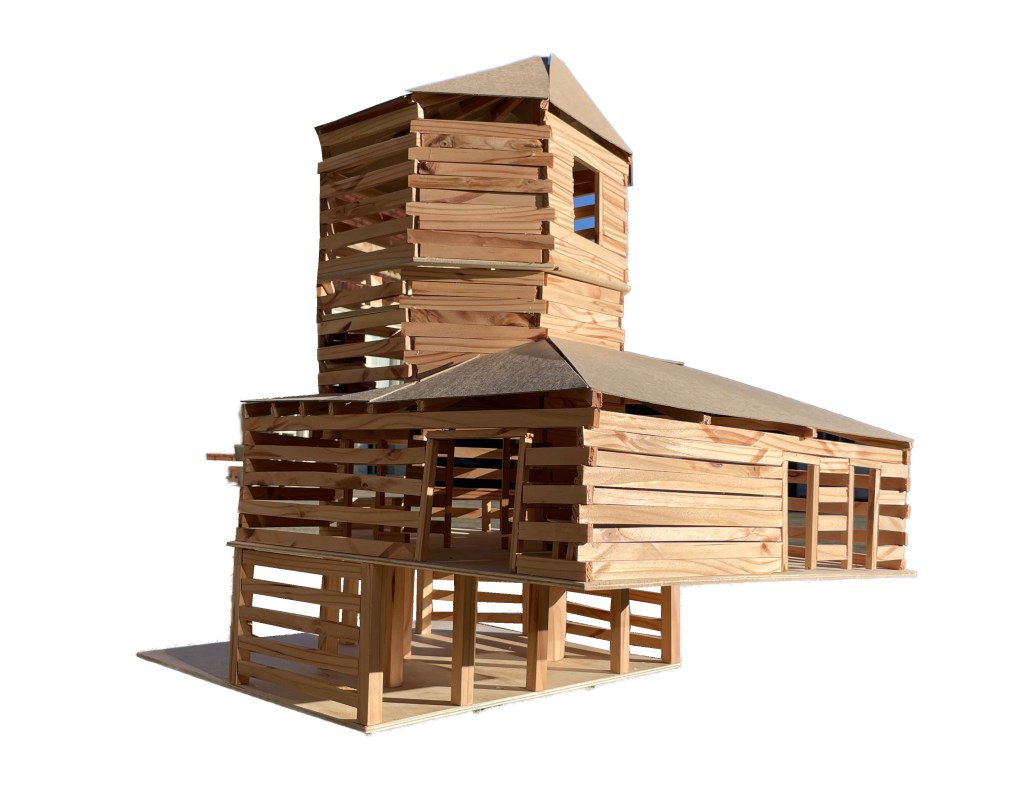
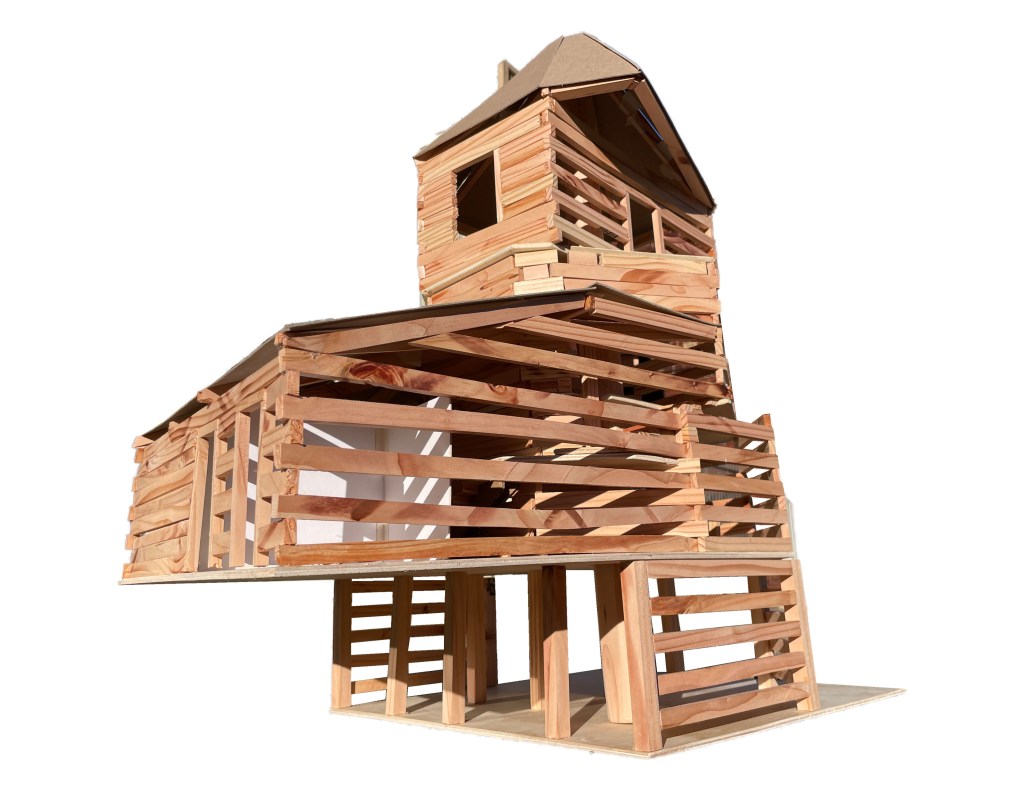
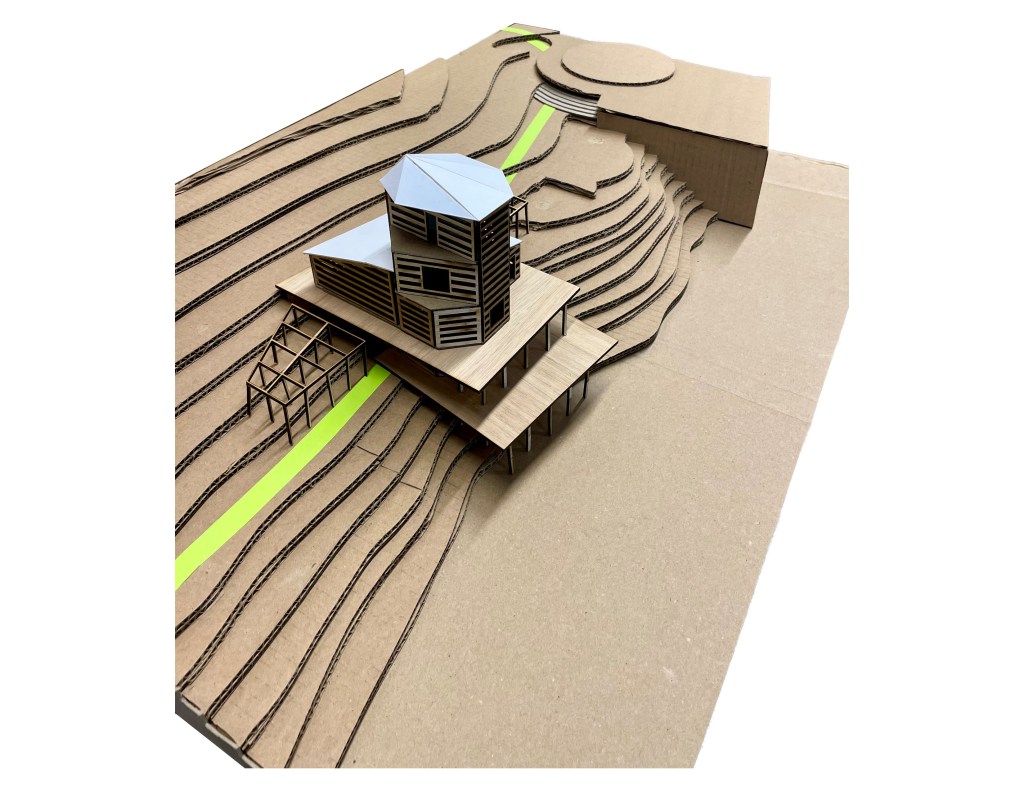
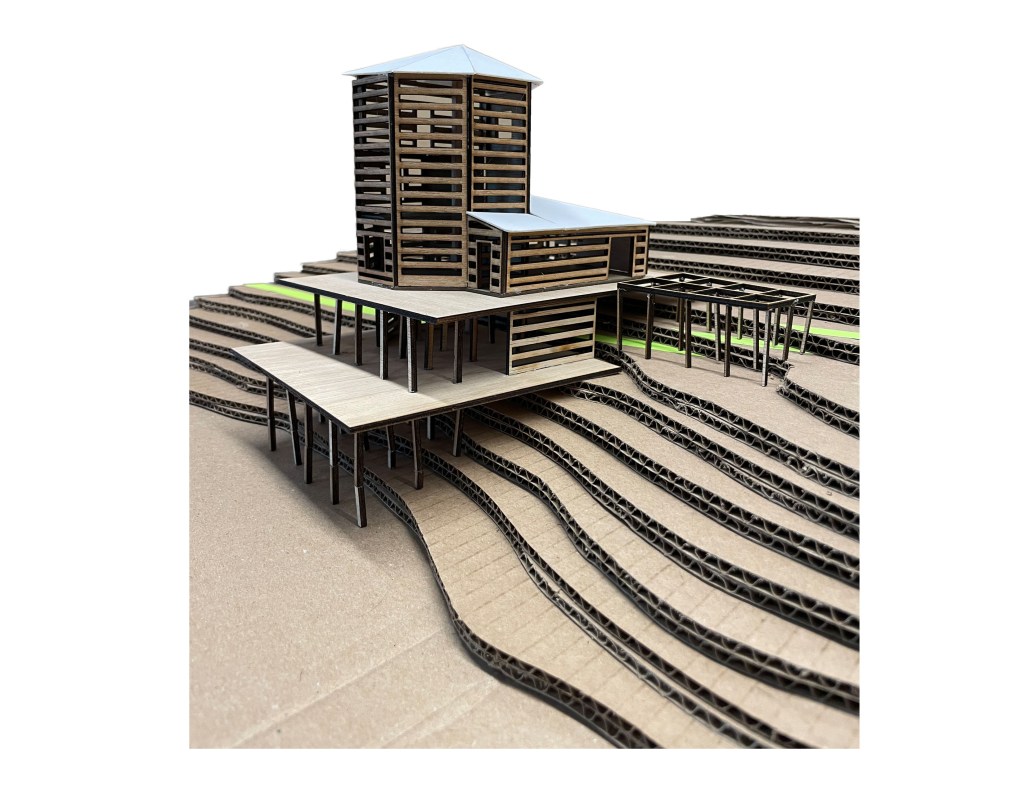
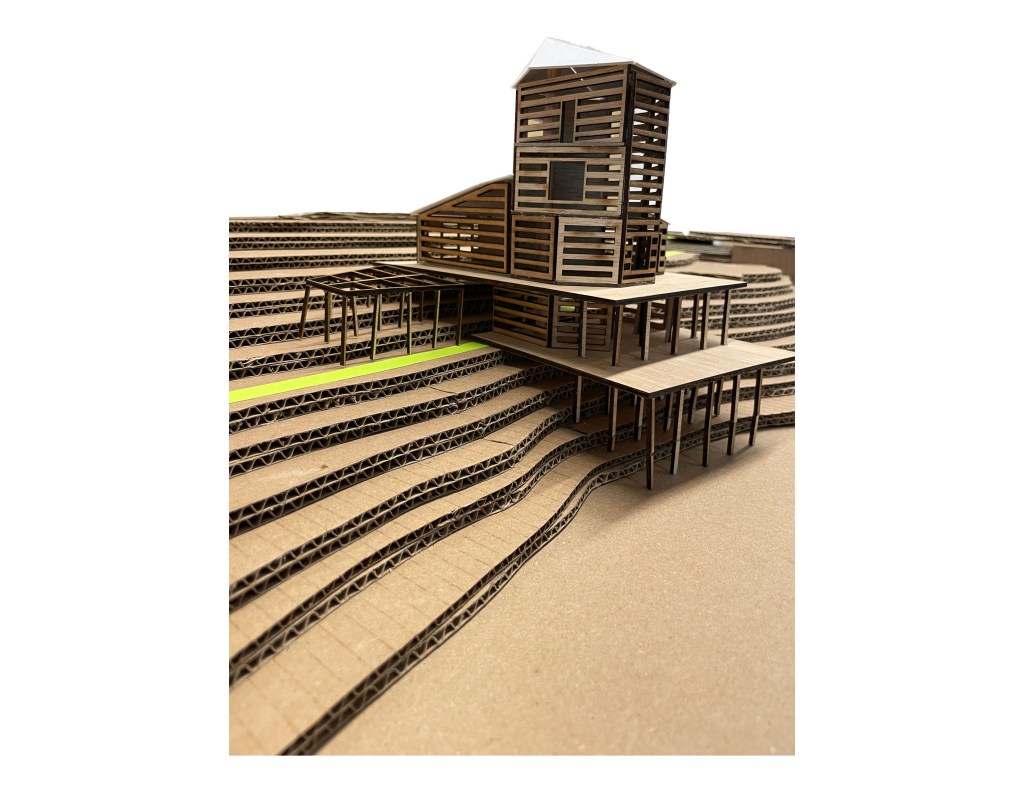
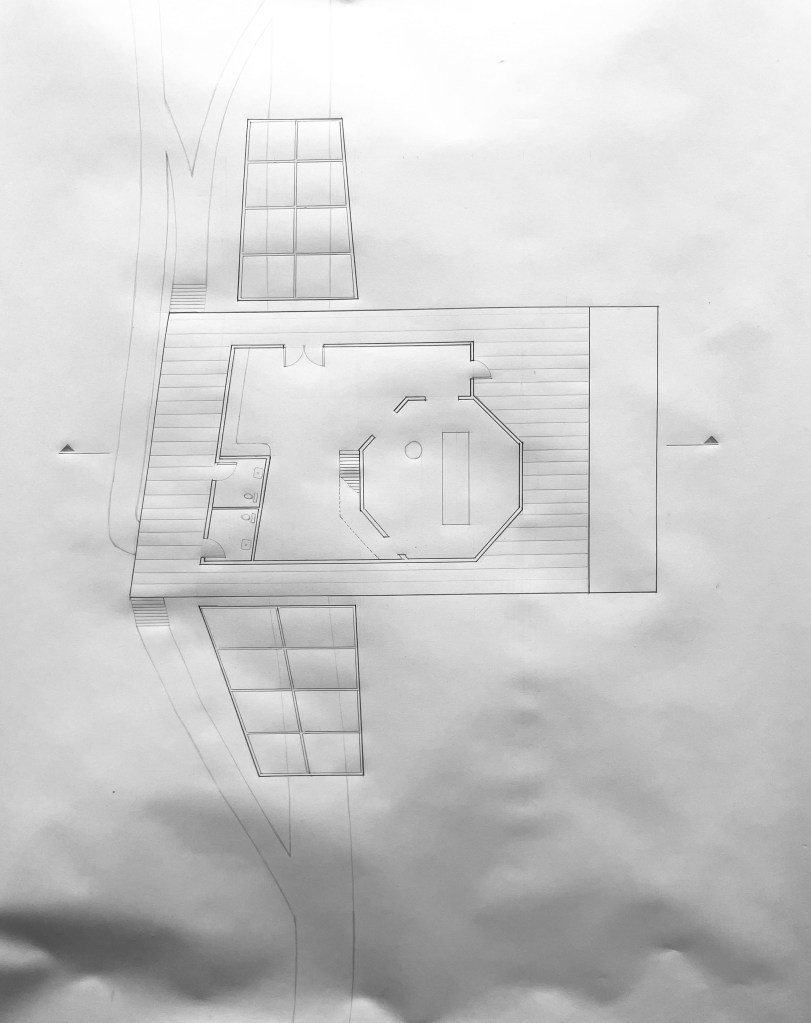
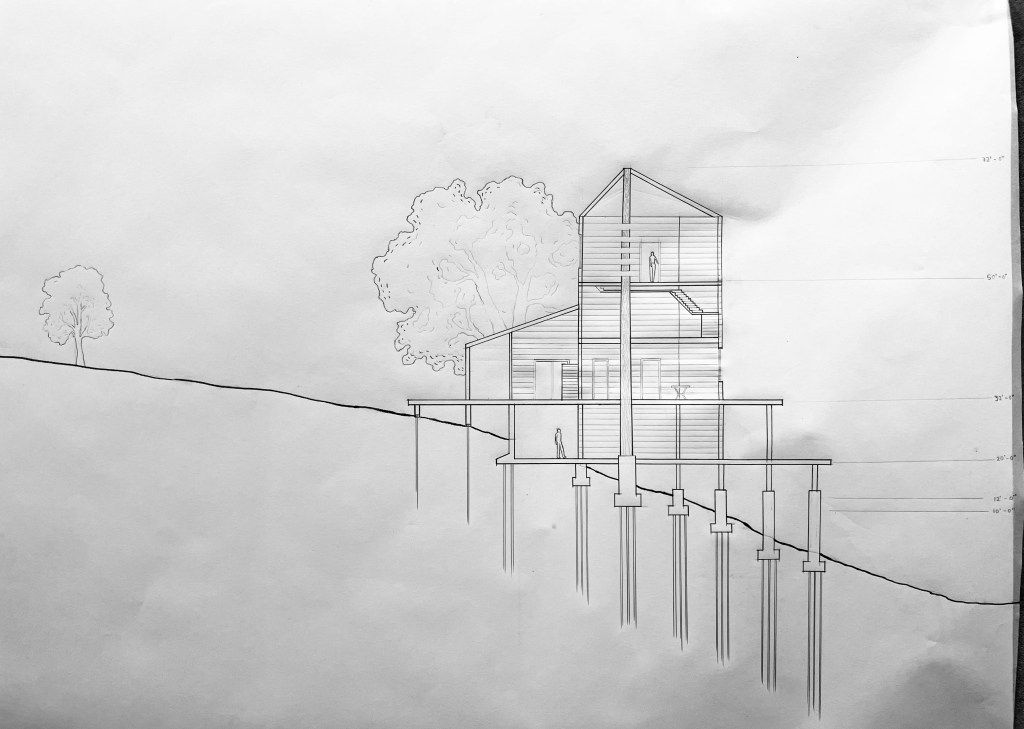
Sources of inspiration: reading Eyes of the Skin led me to Finish architecture such as: Office for Peripheral Architecture, the Löyly public sauna house, and traditional wooden architecture, WholeTrees Structures from Wisconsin who have facilitated as ASTM non-distructive testing process for SRTs (unmilled trunks and branches), and Dowel Laminated Timber (DLT).
Notes from the review:
- The building does not need glazing. To embrace porosity it ought to be open, with chambers on the interior that protect from weather, but at the inner periphery of the building it is porous
- An ethos of repair: designing a modular building that does not use adhesives and has a map of repair with a manual for the dimensions and types for notches, dowels, members, etc. to easily replace rotten wood elements.
- Using different wood types: rot resistant woods on the exterior, soft woods on the interior.
- There are cultures that collectively repair and remud their central mosque seasonally, such as the Great Mosque of Djenné in Mali.
 angiexxallen.com